In the world of rhythm-platformers, few titles demand the level of precision and "flow-state" focus that Dashmetry requires from the very first level.
I’ve played my fair share of Geometry Dash clones, but this title feels different. It isn’t just about memorizing patterns; it’s about feeling the BPM of the track and translating that into pixel-perfect jumps. The synergy between the music and the environmental hazards in Dashmetry is some of the tightest I’ve experienced in a browser-based game.
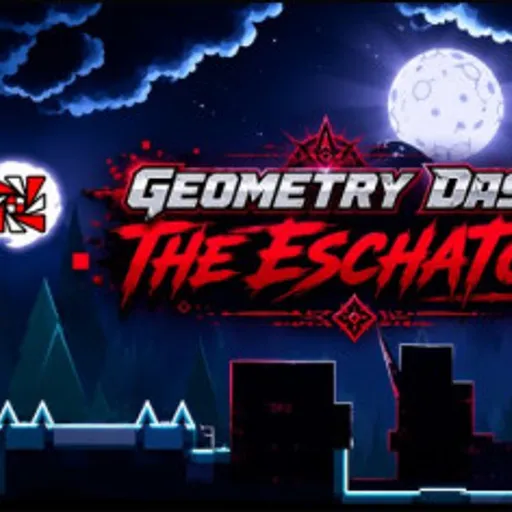
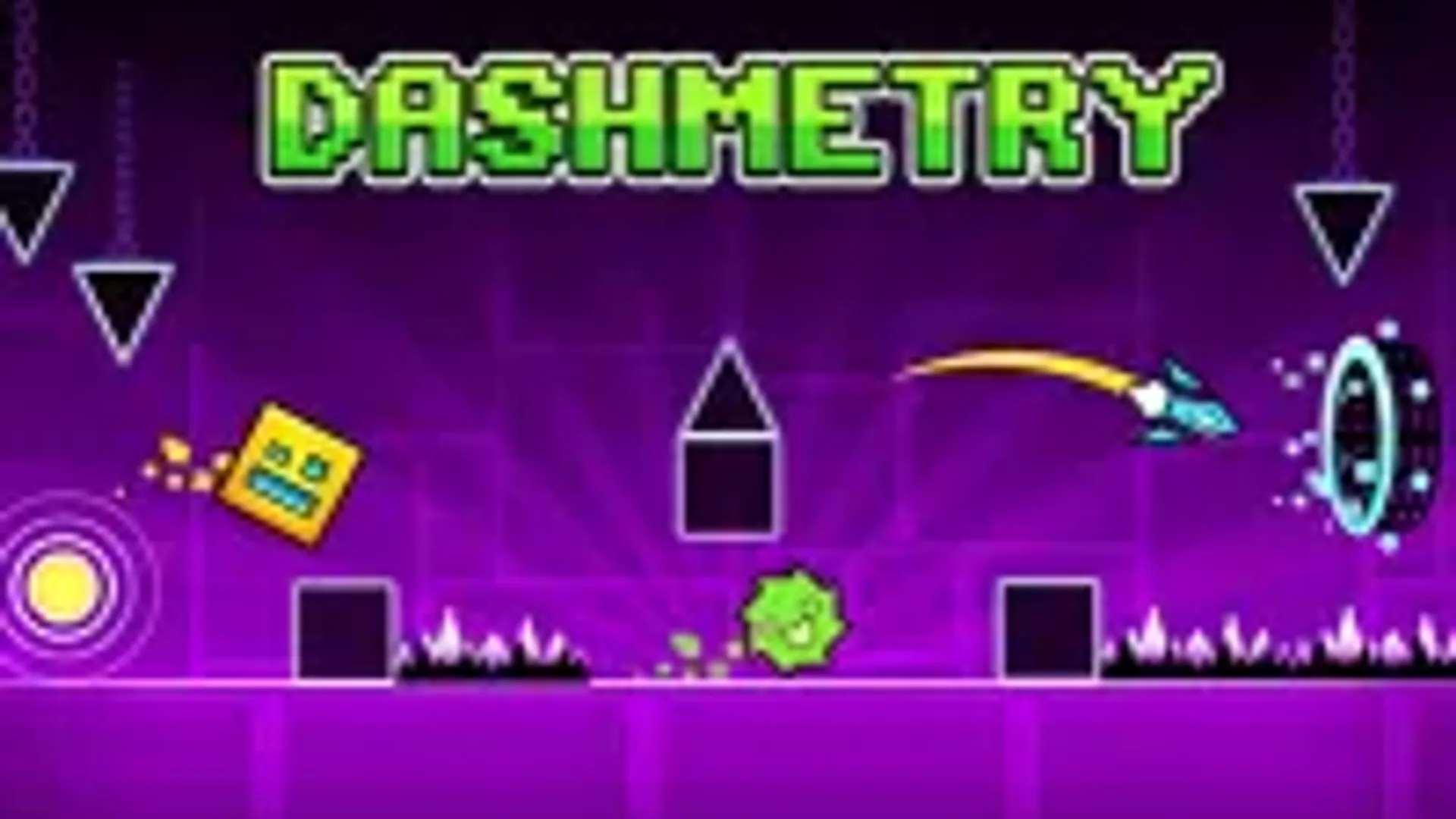
The visual aesthetic of this game is clean, neon, and intentionally minimalist. This isn't just a stylistic choice—it's a functional one. When you're moving at high speeds in Dashmetry, you need to be able to identify spikes, pads, and portals in a fraction of a second. Any visual clutter would be a death sentence, and the developers have found that perfect balance.
"In this game, the music isn't just background noise—it's your primary UI. I found that if I stopped looking at the icon and started listening for the 'anchor beats,' my success rate in Dashmetry doubled. The obstacles are placed specifically on the snare and bass hits. If you can stay on beat, you've already won half the battle."
Unlike other platformers, this game has a very specific jump arc that rewards early inputs. Mastering the 'short-hop' vs. the 'full-jump' is critical for navigating the thorny paths.
Switching between cube, ship, and wave modes in this title happens mid-air. These transitions are the most common fail points for new players because they require immediate changes in physics handling.
In later stages of the game, the gravity will flip constantly. This isn't just a visual gimmick; it completely reverses your muscle memory. Learning to play 'upside-down' is the true mark of a pro.
After sinking hours into the expert difficulty levels in this title, I’ve noticed that most players fail because they panic during speed changes. In Dashmetry, the speed can shift from 0.5x to 3x in a heartbeat.
To combat this, I recommend practicing the 'Static Vision' technique. Focus your eyes about two inches ahead of your icon. Don't track the icon itself; track the obstacles coming toward you. This gives your brain the extra milliseconds needed to process the next input.
What makes this experience truly addictive is the "Just One More Try" factor. Because the levels are so perfectly synced to the music, every failure feels like it was *your* fault, not the game's. In Dashmetry, the feedback loop is instantaneous. You crash, you explode into neon particles, and you're immediately back at the start (or the last checkpoint). There's no downtime to let your frustration build up.
The tracks themselves are high-energy EDM bangers that get your blood pumping. I found myself humming the main theme long after I'd closed my browser. It’s that rare combination of a great soundtrack and challenging gameplay that defines the genre. If you're a fan of high-speed geometry challenges, Dashmetry is a game you simply cannot skip.
In conclusion, Dashmetry is a triumph of rhythm-based platforming. It takes the core elements of the genre—music, geometry, and precision—and polishes them to a mirror finish. Whether you're a casual player looking for some fun tunes or a hardcore gamer seeking the ultimate test of reflexes, Dashmetry has something for you. Just be prepared to fail... a lot. Because in Dashmetry, the path to glory is paved with shattered neon cubes.
I also want to mention the 'Practice Mode'. It allows you to place your own checkpoints anywhere in the level. This is where you do the real work. In this title, you spend a significant amount of your time in practice mode, breaking down the complex sections until they become second nature. Then, you go for the 'Normal' run and hope your nerves hold steady as you dash through the neon obstacles.