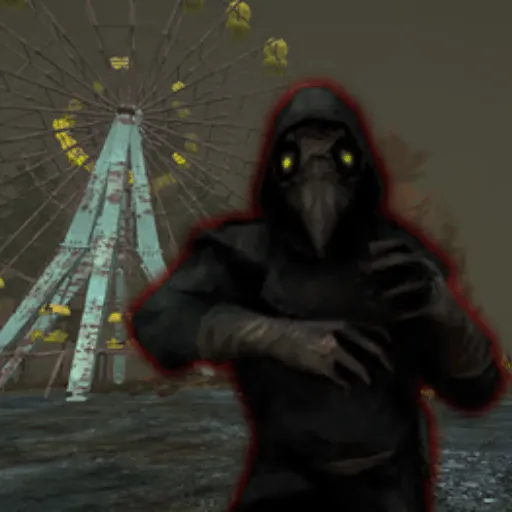
"Join the circle of storytellers in Fear Society. But remember, the story you tell is your own life."
This title is a gripping psychological horror game that explores the dark and uncomfortable depths of loss, guilt, and deep biological denial. Within the narrative, you take on the role of Penelope, a woman who longs to join a mysterious and secretive group — a circle where members share their darkest accounts. As you delve into the narrative of the game, you realize that the story Penelope is telling the group is actually a fragmented and distorted memory of a tragedy that occurred involving her son, Tyler, in a quiet local park many years ago.
The atmosphere in the experience is deliberately cold and empty, masterfully reflecting the protagonist's wounded and unreliable mind. It avoids traditional, loud jump scares, instead relying on hauntingly empty environments and low-frequency, unsettling soundscapes to create a sense of persistent and growing dread. Every interaction in the story feels like uncovering a hidden layer of a suppressed and painful truth, making the journey through the protagonist's mind as much about internal investigation as it is about exploring the physical neighborhood, parks, and gray apartment buildings.
Successfully navigating the world requires meticulous attention to every small environmental detail. You must search for Tyler through various levels of the neighborhood, interacting with missing person notices, handwriting letters, and cryptic date codes like "October 20th, 2016." Each object in this production, from a humming vending machine to a discarded flyer on the pavement, provides a critical piece of the puzzle that explains what really happened to Tyler. The clues are often subtle, hidden within photos and letters that players must carefully decode to unlock new areas.
The storytelling in Fear Society is a visceral and often heartbreaking account of a mother's desperation and her descent into madness. As you navigate the park and neighborhood in Fear Society, every passerby and suspiciously parked car becomes a source of extreme anxiety. Fear Society excels at turning the mundane into the terrifying, using ordinary conversations to hint at something sinister and lurking just beneath the surface. By the end of Fear Society, players are forced to face the harsh reality of Penelope's situation, making Fear Society a deeply emotional and thought-provoking experience that goes far beyond the standard horror trope.
Examine small details in Fear Society. Tabloids, flyers, and butterflies often hide the codes needed to unlock safes and secret rooms in Fear Society.
Read all handwritten letters in Fear Society. These documents are the primary way to reconstruct the timeline of Tyler's disappearance within Fear Society.
Monitor the ambient sound in Fear Society. Changes in the background noise often indicate that you are close to a major narrative revelation in Fear Society.
Talk to every character in Fear Society. Even innocuous comments from NPCs in Fear Society carry hints of suspicion that lead to deeper truths.
Fear Society is not just a horror game; it is a profound and emotionally resonant study of human grief. By capturing the pervasive feeling of denial and the painful process of realization, Fear Society delivers a unique indie experience that resonates with anyone who appreciates narrative depth and artistic integrity. The game’s minimalist approach to mechanics ensures that players remain focused on Penelope’s psychological journey through this unsettling world.
Whether you are investigating the lonely park or the apartment complex, Fear Society offers a compelling and tearful account of profound loss. Experience the mystery of Fear Society today, decode the letters, and discover if Penelope can finally find peace in the world of Fear Society. This title remains a mandatory and essential play for those who enjoy psychological thrillers and emotional, narrative-driven storytelling.