STATUS: ACTIVE // VETERAN GAMER REVIEW
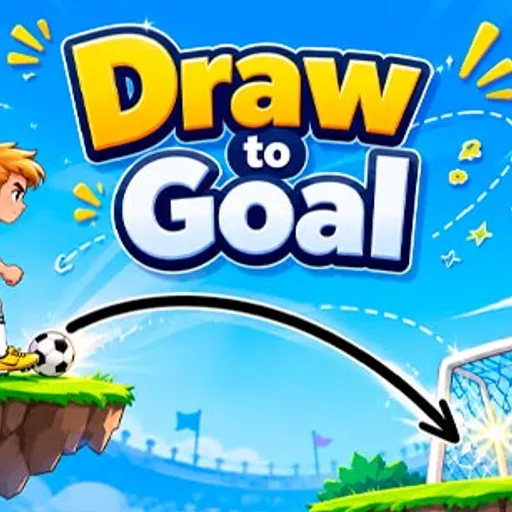
When you first launch Goal Flick, it presents itself as a straightforward, casual sports arcade game. You are placed in front of a soccer goal, given a ball, and tasked with swiping your screen to score. The early levels of Goal Flick reinforce this relaxed, time-waster vibe, letting you casually flick the ball straight down the middle to hit large, stationary targets for easy points. The physics feel bouncy, the graphics are clean, and the mechanics seem incredibly basic.
However, the casual sports facade shatters rapidly once you progress past the tutorial stages. Goal Flick is not a simple swiping game; it is a brutally strict physics simulator that demands absolute geometric precision and perfect swipe velocity. If you attempt to play Goal Flick in the later stages by just wildly swiping in the general direction of the net, the ball will sail into the stands or slam directly into an impenetrable wall of defenders. The game heavily punishes erratic inputs.
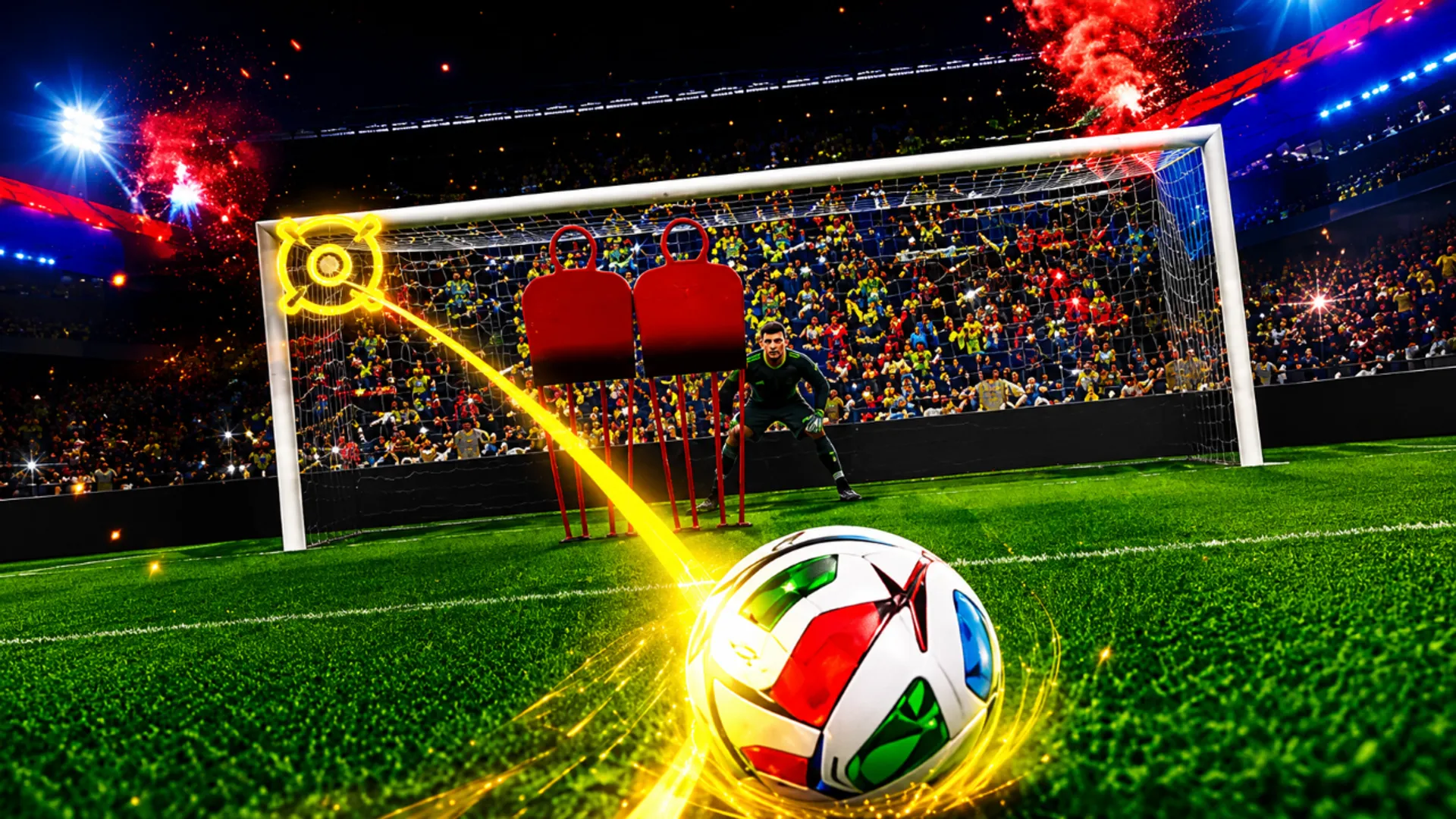
I’ve spent hours grinding for the top of the leaderboards in Goal Flick, and the difficulty scaling is absolutely ruthless. The game stops offering you open nets and starts deploying complex, overlapping defenses—moving goalkeeper walls, unpredictable wind shear variables, and tiny, shifting bullseye targets nestled in the top corners. In Goal Flick, every single shot must be mathematically calculated not just for trajectory, but for curl, spin, and terminal drop.
Surviving the highest tiers of Goal Flick requires a fundamental shift in your mechanical execution. You have to transition from playing reactively to playing like an artillery commander. You aren't just aiming at the goal; you are drawing a complex bezier curve on your screen that accounts for the exact drag coefficient of the ball. Elite veterans playing Goal Flick often spend precious seconds analyzing the wind indicator and defender patrol routes before executing a single, lightning-fast swipe.
The most punishing mechanical element of Goal Flick is how it interprets the "curve" input. The game does not just register the start and end points of your swipe; it tracks the entire arc of your finger. The entire challenge revolves around knowing exactly how sharp of a curve is required to bypass a defender while still generating enough forward velocity to beat the goalie's dive.
The most vital technique for conquering Goal Flick is mastering the game's simulation of the Magnus effect. Swiping in a straight line will always result in a blocked shot against the elite AI defenders. You must apply spin.
Casual players constantly miss in Goal Flick because they overcompensate. They draw massive, looping semi-circles on the screen, causing the ball to curl wildly out of bounds. Veterans of Goal Flick rely on intense micro-adjustments. They utilize a technique called "late-hooking"—drawing a mostly straight line and applying a sharp, microscopic flick at the very end of the gesture to generate immense top-spin, causing the ball to dip aggressively over the wall at the last possible second. This intense, calculated finger control is what separates the frustrated beginners from the true masters of Goal Flick.
Another massive hurdle in Goal Flick is navigating the dynamic environmental variables. The game frequently forces you to shoot through heavy crosswinds that drastically alter the ball's flight path. You do not have the luxury of using the same muscle memory twice.
This environmental pressure creates a brilliant mechanical tension. In Goal Flick, a headwind requires a much faster, harder swipe to maintain altitude, while a tailwind requires a delicate, lofted touch to prevent overshooting. Elite players utilize a technique called "velocity mapping"—calibrating the speed of their swipe perfectly to the wind gauge, intentionally aiming completely off-screen and letting the gale-force winds push the ball back into the top corner. By fully embracing this complex physics calculation in Goal Flick, veterans can safely sink impossible shots with zero margin for error.
For the hardcore high-score community obsessed with logging the biggest numbers in Goal Flick, playing it safe is completely off the table. The highest tier of play revolves around manipulating the combo multiplier and exploiting the way the engine calculates target zones.
These extreme tactics in Goal Flick demand terrifying execution. Nailing a perfect post-scrape requires literally pixel-perfect aiming. If you miss the angle by a fraction of a degree in Goal Flick, the ball bounces harmlessly away, breaking your combo and ruining the run.
The aesthetic presentation of Goal Flick is deliberately designed to induce performance anxiety. The roaring crowd, the ticking countdown timer, and the massive, imposing goalkeeper create a feeling of constant stadium stress. The audio design in Goal Flick provides incredibly satisfying, thundering sound effects for a perfect strike, but punishes your misses with loud groans from the audience. The game actively tries to make you rush your shots.
This psychological pressure makes the core loop of Goal Flick surprisingly addictive. When you finally pull off a flawless top-corner curve against a gale-force wind—perfectly calculating the late-hook, exploiting the velocity map, and hearing the crowd erupt—the feeling of relief is massive. Goal Flick rewards you with the profound dopamine hit of mastering a complex physical simulator through sheer execution.
Key Insight: Goal Flick is a masterful, deceptively vicious distillation of the hardcore sports-physics genre. It takes a highly accessible, casual aesthetic and wraps it around a heavily punishing, swipe-strict mechanical engine. Conquering the elite leaderboards in Goal Flick requires sweat-inducing focus, punishing erratic inputs and rewarding perfect geometric planning with brutal efficiency.
If you are the type of hardcore gamer who thrives on dissecting physics interactions, optimizing swipe velocities, and executing flawless curveballs under extreme pressure, Goal Flick is an absolute must-play. Stop treating it like a casual toilet game and start respecting the aerodynamics. Lock in your spin control, master the wind compensation, and show the leaderboards of Goal Flick exactly what a flawless strike looks like. The net is waiting, and only the most technically proficient strikers will hit the bullseye.
No. In Goal Flick, you must rely entirely on your swiping skill. There are no magical "fireballs" or time-freezing abilities. Pure physics execution is required.
Absolutely not. The drag coefficient and swipe mapping in Goal Flick are hardcoded. You must train your muscle memory to adapt to the game's strict parameters.