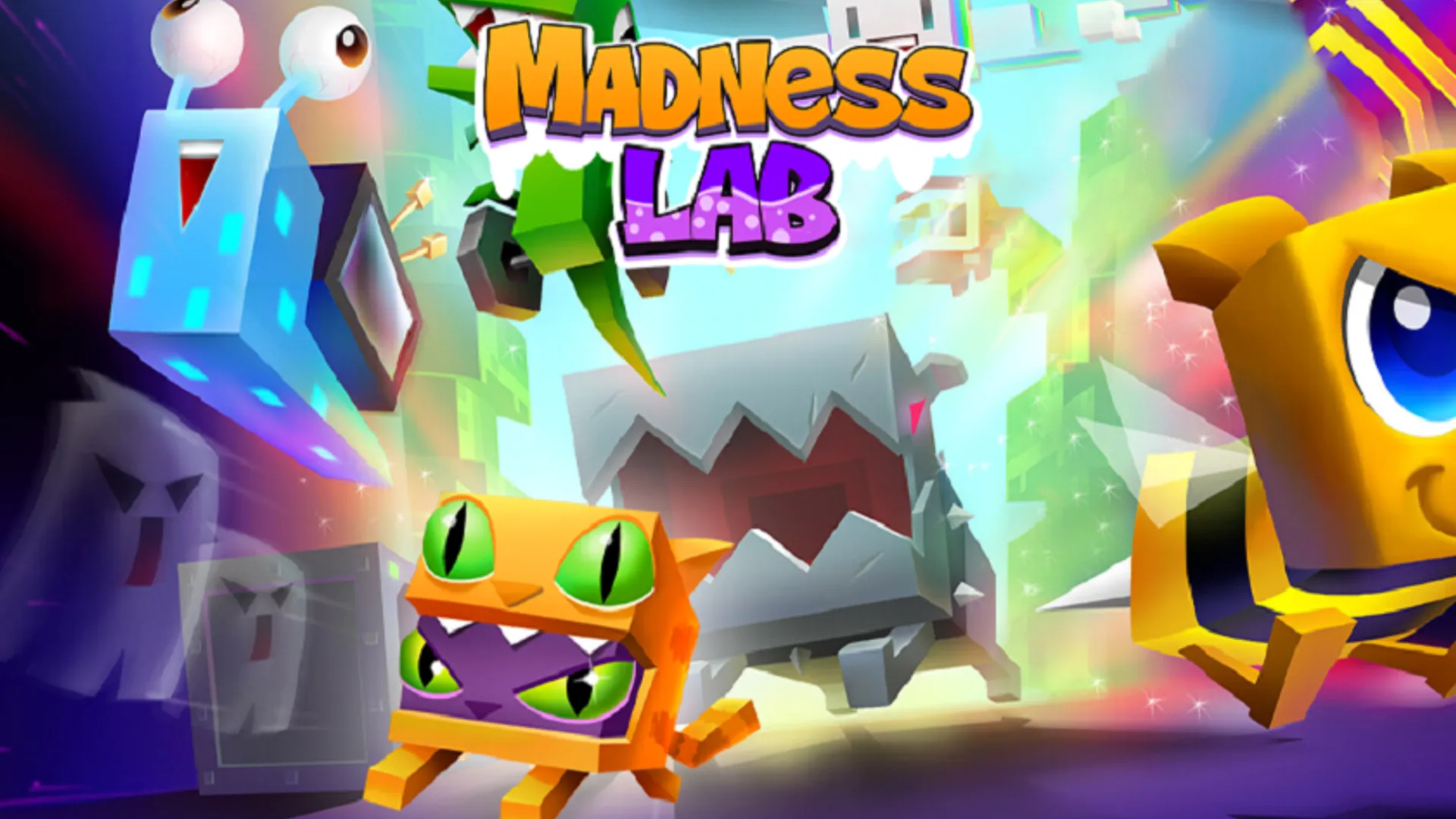
STATUS: ACTIVE // VETERAN GAMER REVIEW
When you first launch Madness Lab, the setup feels like a dark comedy. You are thrust into the role of a curious feline who has unfortunately wandered into the unpredictable laboratory of a deranged scientist. The aesthetic of Madness Lab is heavily industrial, featuring cold steel, glowing neon test tubes, and an overwhelming sense of claustrophobia. The premise is simple: guide the cat through a series of experimental chambers to find the exit. However, the execution of this premise is a brutal, unapologetic exercise in trial-and-error platforming that will push your mechanical patience to its absolute breaking point.
Madness Lab is not a game you can beat on your first attempt. It is a highly lethal puzzle-platformer where the environment actively lies to you. Every single chamber is a perilous maze designed to punish assumption and reward meticulous observation. The laboratory is filled with hooks, lasers, and mechanical traps that are explicitly designed to bait you into making a fatal mistake.
The core gameplay loop of Madness Lab revolves around learning the hidden rules of each specific room. Unlike traditional platformers where spikes simply hurt you if you touch them, the hazards in Madness Lab are highly dynamic and often linked to invisible triggers. You might jump onto a seemingly safe platform, only to trigger a laser grid that instantly vaporizes you. To survive, you must guide the cat carefully through each experimental space, treating every single tile as a potential death trap until proven otherwise.
The physics engine governing the feline protagonist in Madness Lab is deliberately heavy. You do not have the floaty, forgiving air-control of a standard platformer hero. The cat jumps with a realistic, hefty arc and lands with a heavy thud. This lack of aerial maneuverability means that every jump in Madness Lab is a serious commitment. One wrong move—a mistimed leap or a slight miscalculation of momentum—and you will collide with a piece of lethal machinery, forcing you to start the chamber completely over from the beginning.
To conquer the sadistic level design of Madness Lab, you must adopt the mindset of a paranoid bomb defuser. You cannot simply rely on reflexes; you have to rely on logic and pattern recognition. The developer of Madness Lab clearly enjoys subverting player expectations. If a path looks incredibly obvious and safe, it is almost certainly a trap designed to funnel you into a crushing piston.
A significant portion of the difficulty in Madness Lab comes from deciphering the complex trigger sequences. Many of the lasers and hooks operate on hidden timers or pressure plates. Veteran players of Madness Lab spend a considerable amount of time standing perfectly still at the start of a chamber, simply watching the machinery cycle. You must learn the exact rhythm of the death traps, mapping out a mental route that threads the needle through the activating and deactivating hazard zones.
Because the cat's physics are so weighty, the margin for error in Madness Lab is microscopic. The game frequently forces you to navigate through narrow ventilation shafts or squeeze past spinning saw blades with only pixels to spare. Understanding the exact dimensions of the feline hitbox is paramount. In Madness Lab, your tail is just as vulnerable as your head. If even a single pixel of your character model brushes against a glowing laser, the run is over. This demands absolute, surgical precision on the joystick or keyboard.
When attempting to clear the brutal later stages or speedrun the entire complex, standard cautious gameplay is not enough. The elite players of Madness Lab utilize a set of high-level techniques to bypass the intended puzzle logic and exploit the physics engine to their advantage.
The psychological toll of playing Madness Lab is intense. The game is designed to frustrate you. When you perfectly navigate a brutal sequence of spinning blades, only to die to an invisible tripwire right before the exit door, the urge to quit is massive. Madness Lab tests your emotional regulation just as much as it tests your thumbs. You have to accept death as a learning mechanic rather than a punishment.
The audiovisual presentation of Madness Lab perfectly complements its punishing gameplay. The environment is grim and oppressive. The flickering neon lights and the stark shadows make the laboratory feel genuinely hostile. The sound design is particularly effective; the constant hum of electricity, the sharp metallic clangs of pistons firing, and the terrifying sizzle of the lasers create an atmosphere of constant dread in Madness Lab.
When you finally solve a chamber that has killed you fifty times, the silence that follows the deactivation of the traps is incredibly cathartic. Madness Lab delivers a massive dopamine hit precisely because it forces you to earn every single inch of progress through blood, sweat, and feline tears. You didn't just beat a level; you outsmarted a sadistic architect.
Key Insight: Madness Lab is a brilliant, vicious homage to the golden age of "masocore" platformers. It weaponizes its level design, forcing the player into a grueling cycle of trial, error, and eventual mastery.
If you lack patience, Madness Lab will be a miserable experience. The game has zero interest in holding your hand or forgiving your mistakes. However, if you are the type of hardcore gamer who thrives on solving lethal puzzles, memorizing complex trap cycles, and executing pixel-perfect jumps under intense pressure, Madness Lab is an absolute triumph. It is a grueling, rewarding test of skill. Guide the cat, dodge the lasers, and see if you have the mental fortitude to escape the laboratory in Madness Lab.
No. Each chamber in Madness Lab is a self-contained gauntlet. If you die right in front of the exit door, you are instantly teleported back to the very beginning of that specific room.
Thankfully, no. Madness Lab recognizes its own brutal difficulty and provides you with infinite lives. The only penalty for death is the loss of time and the emotional damage to your pride.