STATUS: ACTIVE // VETERAN GAMER REVIEW
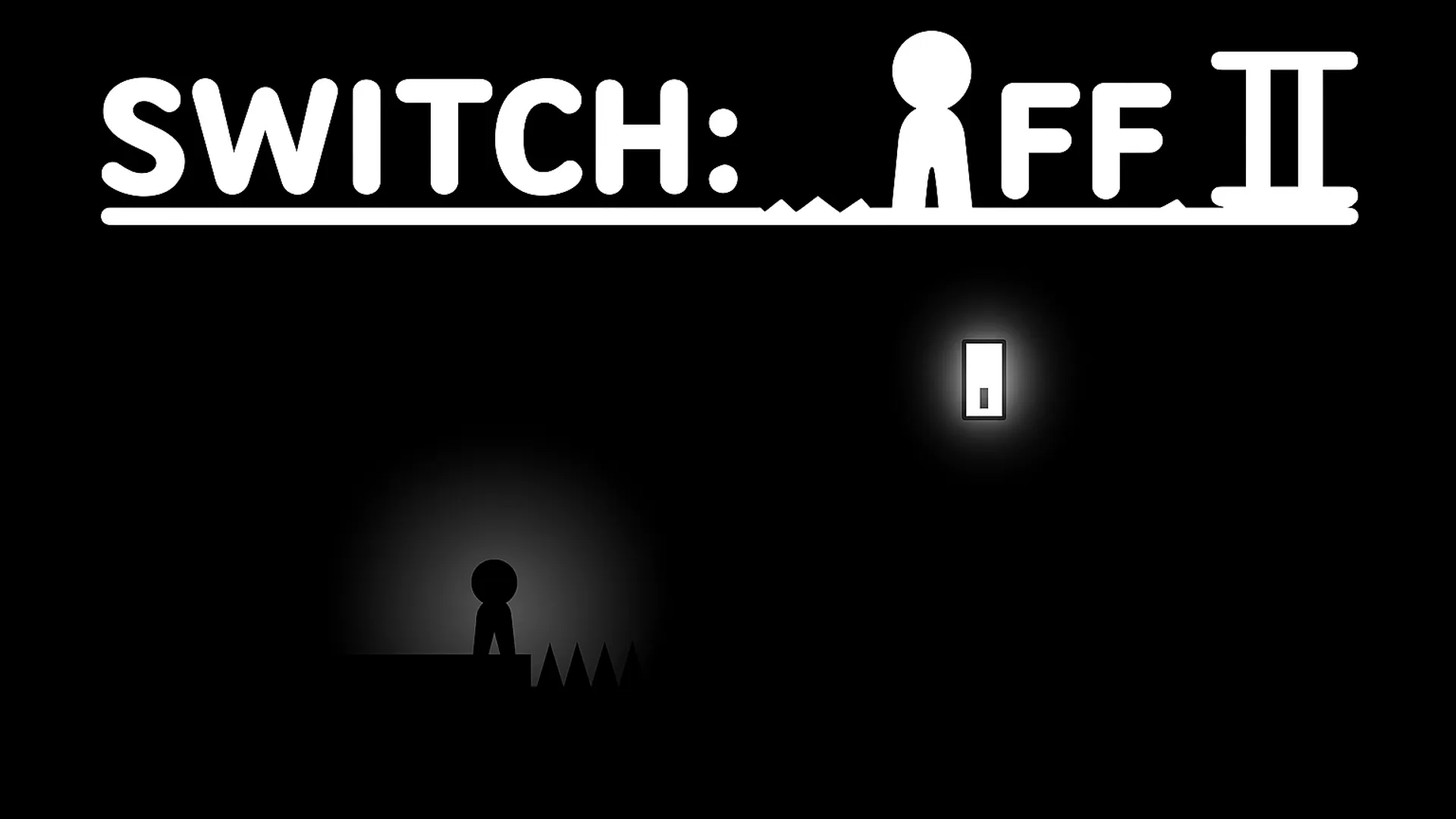
When you first boot up Switch Off 2, it seems like a fairly standard puzzle platformer. The premise is deceptively simple: you need to guide your character through a series of enclosed rooms to reach the exit door. The catch? The world is almost entirely pitch black. You only have a tiny, faint glow surrounding your character, illuminating barely enough space to see your immediate footing. Switch Off 2 isn't just about jumping over gaps; it's a brutal test of spatial awareness and short-term memory.
The core hook of Switch Off 2 is its brief illumination phase. Before you even take your first step in a new room, the game flashes the entire layout in full brightness for just a few agonizingly short seconds. You have to burn the image of the traps, the platforms, and the exit into your brain before the lights cut out completely.
I’ve spent hours mapping out the later sectors of Switch Off 2, and the difficulty curve is absolutely sadistic. The first few levels are forgiving, letting you slowly feel your way across flat platforms. But very quickly, Switch Off 2 introduces moving saw blades, crumbling floors, and spike pits that blend perfectly into the void. If you try to play Switch Off 2 by just reacting to what enters your tiny circle of light, you will die. The movement speed of the character is intentionally calibrated to make reaction-based dodging almost impossible when navigating the dark.
To actually survive the later stages of Switch Off 2, you have to transition from playing a platformer to executing a pre-programmed mental macro. You aren't reacting to the screen; you are executing the route you memorized during the flash phase. Elite runners playing Switch Off 2 often close their eyes during the dark phase, relying entirely on internal rhythm and muscle memory to count the exact milliseconds between jumps.
The most fascinating mechanical element of Switch Off 2 is how it manipulates your confidence. The game actively weaponizes your own short-term memory against you. The entire challenge revolves around trusting an image that disappeared three seconds ago, while the game actively tries to disorient you with subtle audio cues and slightly altered jump physics in the dark.
The most vital technique for conquering Switch Off 2 is understanding the concept of "anchoring." Since the light flash is so brief, trying to memorize every single spike is a trap. The human brain cannot process the entire grid of Switch Off 2 in two seconds. Instead, you must identify two or three safe "anchor points" in the room—a wide platform or a corner—and only memorize the path between them.
Casual players constantly die in Switch Off 2 because they hesitate. They inch forward, trying to maximize their tiny light aura. But in Switch Off 2, hesitation breaks your internal rhythm. Veterans of Switch Off 2 rely on full-speed blind jumping. By committing to the jump arcs and trusting their anchor points, they maintain the precise momentum required to clear the wider gaps. This aggressive, blind navigation separates the casual puzzle fans from the hardcore Switch Off 2 survivors.
Another massive hurdle in Switch Off 2 is the audio design. When the lights go out, your hearing becomes your primary sensory input. But Switch Off 2 does not play fair. The game utilizes audio masking—layering ambient hums and dripping water sounds to obscure the mechanical whir of approaching saw blades.
This sensory deprivation is a brutal mechanical check. In Switch Off 2, you cannot trust the audio mix completely. Elite players utilize a technique called "wall buffering"—intentionally bumping into a safe wall to reset their spatial alignment and audio tracking before making a critical jump. By forcing the character to a complete stop against a solid surface in Switch Off 2, veterans can recalibrate their internal map, ensuring they don't drift into a hazard during a long horizontal jump.
For the speedrunning community obsessed with logging the fastest possible times in Switch Off 2, playing the game as intended is entirely too slow. The upper echelon of play revolves around manipulating the character's hitbox and exploiting the way the engine loads the dark phases.
These extreme tactics in Switch Off 2 demand terrifying execution. Nailing a perfect corner boost in absolute darkness leaves zero margin for error. If you miss the frame alignment by a fraction of a millisecond in Switch Off 2, you fall straight into the void, ruining the entire run.
The aesthetic presentation of Switch Off 2 is deliberately designed to induce paranoia. The stark contrast between the blinding flash and the pitch-black gameplay creates a feeling of constant psychological stress. The audio design in Switch Off 2 provides a creeping, dissonant soundtrack that heightens the tension of every blind leap. The game actively tries to make you second-guess your own memory, forcing rash movements.
This sensory pressure makes the core loop of Switch Off 2 surprisingly addictive. When you pull off a massive, multi-jump sequence perfectly in the dark—executing the anchor strategy, surviving the audio masking, and finally reaching the exit—the feeling of relief is immense. Switch Off 2 rewards you with the profound dopamine hit of outsmarting your own sensory limitations through sheer focus.
Key Insight: Switch Off 2 is a masterful, deceptively vicious distillation of the precision platformer. It takes a highly accessible, minimalist aesthetic and wraps it around a heavily punishing, memory-strict mechanical engine. Conquering the final sectors in Switch Off 2 requires sweat-inducing focus, punishing sloppy hesitation and rewarding perfect spatial routing with brutal efficiency.
If you are the type of hardcore gamer who thrives on dissecting level layouts, optimizing jump arcs, and executing flawless blind maneuvers under extreme pressure, Switch Off 2 is a must-play. Stop treating it like a casual puzzle game and start respecting the darkness. Lock in your anchor points, master the wall buffering, and show the leaderboards of Switch Off 2 exactly what a flawless run looks like. The void is waiting, and only the most technically proficient players will see the light again.
No. In Switch Off 2, you must clear the entire room in one sequence. Any mistake sends you back to the beginning of that specific chamber, forcing you to re-memorize the layout.
Nice try, but no. The engine of Switch Off 2 physically unloads the textures of the hazards during the dark phase. Upping your brightness will just show you a gray screen; the traps literally aren't drawn until you are standing right next to them.