STATUS: ACTIVE // VETERAN GAMER REVIEW
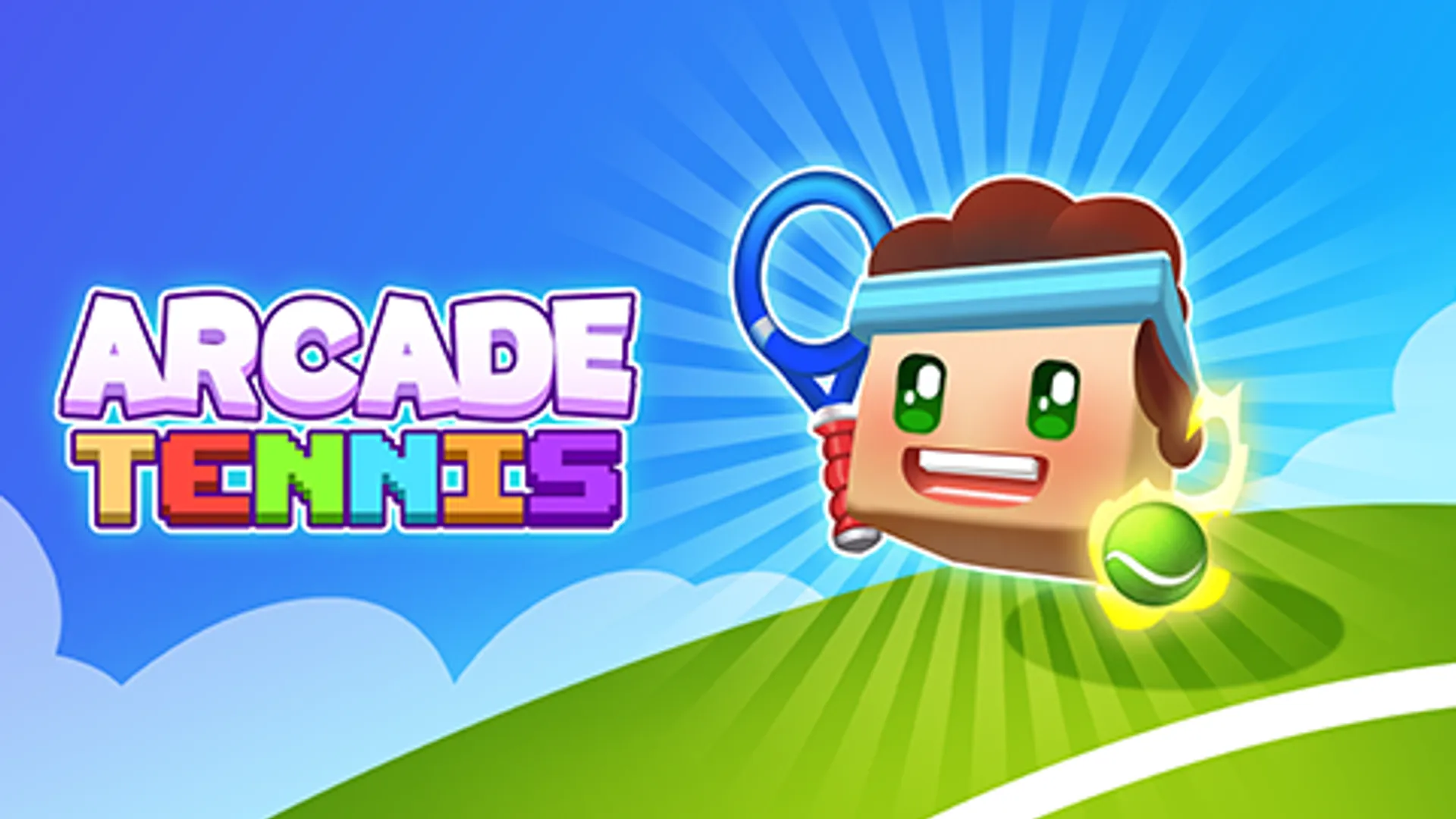
Tennis simulators typically strive for hyper-realism, focusing on licensed players, complex swing mechanics, and perfectly rendered grass physics. Arcade Tennis completely discards that simulator philosophy in favor of a bright, vibrant, and highly stylized voxel-art approach that emphasizes pure, responsive gameplay. However, beneath its charming, blocky exterior lies a surprisingly deep and punishing precision sports game. In Arcade Tennis, the goal is not simply to hit the ball past your opponent. Instead, the court is littered with dynamic, glowing hoops and targets. Scoring a traditional point in Arcade Tennis yields a minimal reward, but perfectly angling a high-velocity serve through a shrinking target multiplier can instantly swing the momentum of an entire match. This fundamental shift in scoring mechanics transforms Arcade Tennis from a standard sports title into a high-stakes puzzle game masquerading as a tennis match, where geometry and spatial awareness are far more important than raw power.
The defining hook that separates Arcade Tennis from its competitors is the glowing target system that actively alters the court during play. As a rally continues, massive glowing hoops will materialize above the net or in the deep corners of the opponent's side. If you manage to hit the ball through these hoops in Arcade Tennis, the speed of the ball doubles, and it acquires a fiery visual trail, making it incredibly difficult for the AI opponent to return.
This mechanic in Arcade Tennis fundamentally changes how you approach a rally. You are no longer just trying to hit the ball away from the other player; you are actively trying to set up your shot to intersect with the floating targets. It forces you to take massive risks. Do you play a safe, deep lob to keep the rally alive, or do you attempt a highly technical, sharp-angled slice to hit the x3 multiplier hoop hovering just barely above the net? In Arcade Tennis, the safe play is rarely the winning play. The game actively rewards aggressive, mathematically precise shot-making, creating a highly addictive risk-versus-reward loop that keeps matches tense and completely unpredictable.
Furthermore, the voxel engine in Arcade Tennis ensures that the collision detection is razor-sharp. If your ball clips the very edge of a hoop, it might violently change trajectory, completely throwing off both you and your opponent. The physics in Arcade Tennis are exaggerated but consistent, allowing skilled players to memorize the exact bounce angles required to consistently hit the targets.
The control scheme in Arcade Tennis is elegantly simple, relying on just three core types of strikes: the Flat Drive, the Topspin Lob, and the Backspin Slice. Mastering when to use each of these strikes is the key to dominating the tournament ladder.
The Flat Drive is your primary offensive weapon in Arcade Tennis. It travels in a straight, high-velocity line, making it perfect for smashing through mid-air targets. However, the Flat Drive has very little vertical arc, meaning that if you mistime the swing even slightly, the ball will slam directly into the net. The Topspin Lob, conversely, creates a massive parabolic arc. In Arcade Tennis, the lob is essential for hitting targets that spawn high above the court, but it gives your opponent ample time to position themselves for a devastating overhead smash.
The true depth of Arcade Tennis is found in the Backspin Slice. When you execute a slice, the ball hovers low over the net and drastically slows down upon bouncing. Advanced players use the slice in Arcade Tennis to completely disrupt the rhythm of the AI. By alternating between a blistering Flat Drive and a slow, agonizing Backspin Slice, you can force the opponent out of position, opening up the court for an easy target acquisition on your next return.
While the ball physics are exaggerated, the player movement in Arcade Tennis is surprisingly grounded. Your voxel character possesses a hidden stamina meter. Every time you sprint to reach a ball or perform a diving save, your stamina depletes. If you exhaust your stamina in Arcade Tennis, your character will visibly pant and their movement speed will be drastically reduced for several seconds.
Key Insight:This stamina mechanic means that you cannot simply run back and forth across the baseline indefinitely. In Arcade Tennis, court positioning is paramount. You must learn to read the angle of the incoming ball and move to the optimal interception point using the minimal amount of movement. "Cutting off the angle" is a critical skill. By stepping into the court and taking the ball early on the rise in Arcade Tennis, you give your opponent less time to react and you conserve your own precious stamina.
The AI opponents in the later stages of the Arcade Tennis tournament are notoriously difficult, possessing seemingly impossible reaction times. However, like all programmed AI, they have specific behavioral patterns that advanced players can exploit.
Every racket in Arcade Tennis has a hidden "sweet spot" in the center of its voxel mesh. If you strike the ball exactly within this sweet spot, the game will trigger a subtle audio cue—a sharp, satisfying *crack*—and the ball will travel 20% faster with increased accuracy. Hitting the sweet spot requires you to initiate your swing animation a fraction of a second earlier than feels intuitive. Memorizing this exact timing window is the final hurdle to mastering Arcade Tennis.
The audiovisual presentation of Arcade Tennis is phenomenally charming. The voxel art style gives the game a clean, retro-modern aesthetic, reminiscent of classic 3D arcade games but rendered with modern lighting and shadows. The characters in Arcade Tennis are delightfully quirky, ranging from standard athletes in sweatbands to unlocking bizarre avatars like a voxelized robot or a businessman in a suit.
The sound design is crucial to the gameplay loop in Arcade Tennis. The rhythmic *thwack* of the rallies in Arcade Tennis creates a hypnotic beat. When you successfully hit a ball through a glowing multiplier hoop, the game triggers a massive, synthesized bass drop, and the crowd roars in approval. The dopamine hit in Arcade Tennis comes from chaining these multipliers together. Hitting a x2 hoop, immediately returning a volley through a x3 hoop, and watching the ball burst into flames as it slams past a bewildered AI opponent provides an unparalleled rush of arcade satisfaction.
Arcade Tennis successfully bridges the gap between casual sports games and hardcore, mechanics-driven arcade titles. It is incredibly easy to pick up and play, making it perfect for quick five-minute sessions. However, the incredibly high skill ceiling provided by the target multiplier system and the stamina mechanics ensures that dedicated players will find dozens of hours of deep, strategic gameplay.
If you are looking for a highly realistic simulation of Wimbledon, this is not the game for you. Arcade Tennis is loud, fast, and completely unrealistic. But if you enjoy games like Mario Tennis or classic Sega arcade sports titles—games that prioritize fun, speed, and precision over realism—Arcade Tennis is a brilliantly executed, highly addictive gem that deserves a spot in your browser game rotation.
Yes. While the starting characters are balanced all-rounders, the unlockable characters in Arcade Tennis feature drastically different stat distributions. Some are incredibly fast but have weak shots, while others hit massive power-drives but consume stamina very quickly.
To achieve a perfect serve in Arcade Tennis, you must release the strike button exactly when the power meter reaches the dark orange zone. Aim for the far corners of the service box to force a weak return and set up an immediate target strike.
Secret characters in Arcade Tennis (like the Cyborg and the Ninja) are unlocked by completing the tournament mode without dropping a single set, or by hitting the 10x target multiplier three times in a single exhibition match.
The Hard AI in Arcade Tennis rarely makes unforced errors. To win, you must stop trying to hit raw winners. Instead, focus entirely on threading your shots through the glowing multiplier hoops to win via points rather than traditional tennis scoring.
The hidden courts—such as the Neon Cyber-Court and the Lava Arena—are unlocked by completing the final tier of the Arcade Tennis championship tournament without losing a single set. It is a brutal challenge meant only for the most dedicated players.