STATUS: ACTIVE // VETERAN GAMER REVIEW
When you first encounter the premise of Brainrot Park, it sounds like an elaborate internet joke. You are tasked with building and managing a unique idle simulation park entirely dedicated to housing quirky, bizarre meme creatures known as "Brainrots." The aesthetic is chaotic, the themes are absurdist, and the initial gameplay seems entirely passive. However, veteran simulation gamers know better than to judge an idle game by its cover. Beneath the ridiculous meme exterior of Brainrot Park lies a highly sophisticated, mathematically intense resource management engine that will completely hijack your dopamine receptors.
The core of Brainrot Park is not about active reflexes or intense combat; it is an exercise in extreme optimization. The combination of park management, creature collecting, and complex merging elements creates an addictive yet deceptively relaxing gameplay loop. Your primary enemy is not a boss monster, but inefficiency.
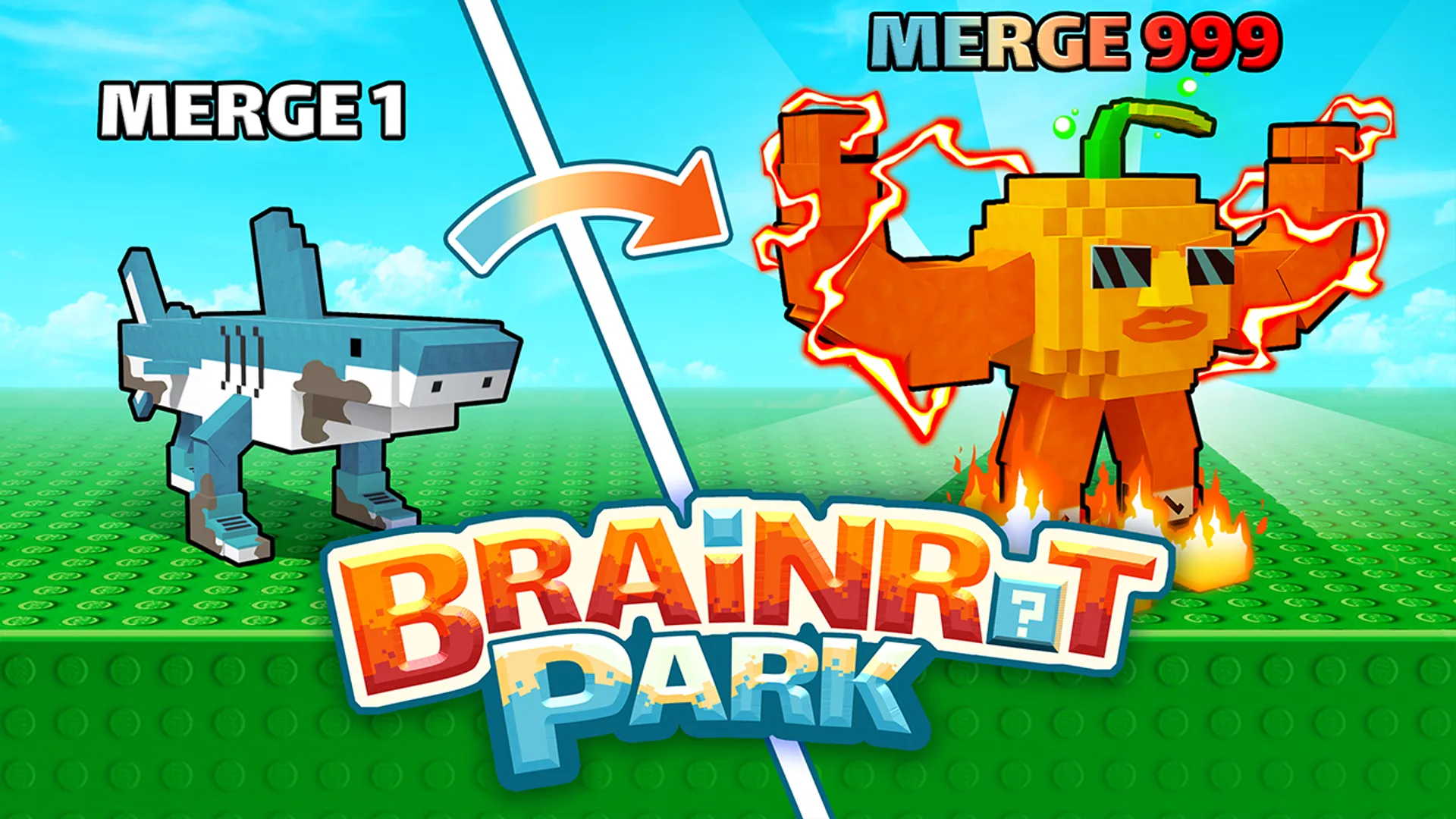
In the early hours of Brainrot Park, the game holds your hand. You click a few buttons, spawn a low-level meme creature, and watch as it slowly generates passive income. It feels like a standard, low-effort clicker. But as you unlock the merging mechanics, the complexity curve of Brainrot Park skyrockets. To progress, you must combine identical low-level Brainrots to create higher-tier, vastly more profitable creatures. This creates an exponential mathematical puzzle. To get one Tier 10 creature, you need a massive, perfectly optimized pipeline generating thousands of Tier 1 creatures.
Managing this pipeline is where the true hardcore experience of Brainrot Park emerges. You are constantly balancing limited park space, upgrade costs, and spawn rates. If you expand your park too quickly without upgrading your spawn speed, you will run out of resources and grind to a miserable halt. If you focus entirely on merging but neglect your base passive income generators, your economy will stagnate completely. Brainrot Park forces players to become virtual spreadsheet managers, calculating the exact return on investment for every single click. You must constantly evaluate the long-term mathematical viability of your current layout, shifting your entire strategic focus on a daily or even hourly basis as new mechanics unlock in Brainrot Park. The difference between a casual park and a top-tier operation is defined purely by this relentless mathematical optimization.
To dominate the late-game economy of Brainrot Park, you must abandon casual clicking and adopt a mindset of absolute min-maxing. The elite players in the community do not just let the game run; they strategically trigger prestige resets, mathematically charting out the optimal time to sacrifice their entire park for permanent, global multipliers. Understanding this macro-economic strategy is the key to conquering the game.
The merging mechanic in Brainrot Park is not a simple 1+1=2 equation. Higher-tier creatures often have hidden synergy bonuses or non-linear profit curves. Hardcore players analyze the exact revenue-per-second of every single creature tier. Sometimes, in the chaotic economy of Brainrot Park, it is actually more profitable to maintain a massive army of Tier 5 creatures rather than immediately merging them into a single Tier 6, depending on your current global multipliers and park space limitations.
Another massive hurdle in Brainrot Park is deciding how to allocate your premium upgrades. Do you invest in "offline progress" so your park generates billions while you sleep, or do you invest in "active click damage" to accelerate your progress while the app is open? The most successful parks in Brainrot Park utilize a hybrid strategy, utilizing active clicking to power through slow economic bottlenecks and relying on massive offline multipliers to brute-force the astronomical costs of the final upgrades.
When you reach the absolute endgame of Brainrot Park, the numbers become incomprehensibly large. Trillions become quadrillions, and standard upgrades barely make a dent in the progress bar. Surviving the endgame grind requires extreme dedication to the prestige mechanics and deep knowledge of hidden synergies.
The psychological hold that Brainrot Park exerts on its players is profound. Because the game is "idle," it demands very little physical exertion, making it incredibly easy to leave running on a second monitor. However, the constant, creeping desire to check in, merge just a few more creatures, and buy one more upgrade turns Brainrot Park into a chronic, highly addictive background task that slowly consumes your daily routine.
The genius of Brainrot Park lies in the juxtaposition of its hardcore mathematical engine against its completely unserious aesthetic. Watching horrific, mutated meme creatures flop around a beautifully rendered theme park creates a surreal visual experience. The developer of Brainrot Park understood that staring at a spreadsheet is boring, so they disguised the spreadsheet as a chaotic circus.
The dopamine hits in Brainrot Park are masterfully paced. The game constantly feeds you a steady stream of micro-rewards—a new creature unlocked, a massive multiplier achieved, a visual upgrade to your park gates. When you finally hit that monumental milestone and watch your revenue-per-second number shatter the UI limits in Brainrot Park, the feeling of sheer progression is unmatched. The developers of Brainrot Park have scientifically engineered the notification sounds and the flashing visual indicators to provide maximum psychological satisfaction, turning the simple act of merging two bizarre pixels into a profoundly rewarding, brain-tickling experience that forces you to keep the application open for just five more minutes.
Key Insight: Brainrot Park is a masterclass in incremental game design. It uses a hilarious, culturally relevant aesthetic as a trojan horse to deliver a brutally complex, deeply satisfying mathematical optimization puzzle.
If you are looking for a game with intense action, deep lore, or high-speed reflexes, Brainrot Park is entirely the wrong genre. However, if you are the type of analytical gamer who loves watching numbers go up, organizing efficient systems, and optimizing resource pipelines to absolute perfection, Brainrot Park is a dangerously addictive rabbit hole. Embrace the absurdity, do the math, and see if you have the managerial fortitude to build the ultimate monument to internet culture in Brainrot Park.
No. Like all elite idle games, Brainrot Park features robust offline progression. Your park will continue to generate revenue based on your passive multipliers even when the application is closed.
While there is technically a final, ultimate creature tier, the prestige mechanics and global multipliers in Brainrot Park ensure that the economic grind is functionally infinite, providing endless hours of optimization.