











Curve Ball 3D: Mastering High-Speed Spin Deflection
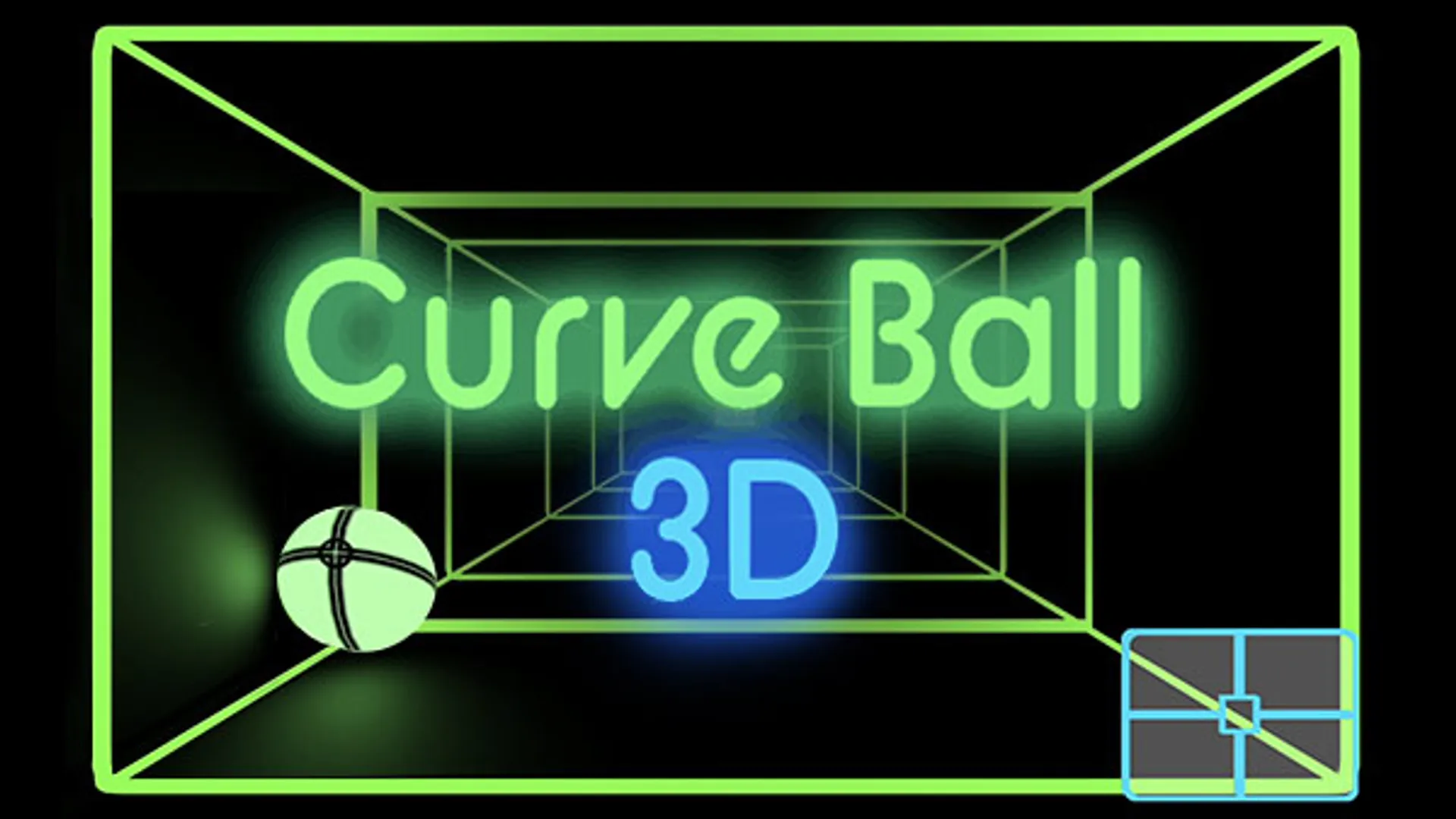
When examining classic browser-based gaming history, few titles deliver pure adrenaline quite like Curve Ball 3D. By transforming simple two-dimensional paddle mechanics into an immersive first-person perspective, Curve Ball 3D creates an incredibly intense visual experience. You find yourself staring down an endless, neon-lit rectangular tunnel. A glowing sphere bounces back and forth, accelerating dramatically after every successful deflection. Your primary objective involves controlling a translucent square paddle, ensuring this glowing sphere never slips past your defensive perimeter in Curve Ball 3D. Missing just one block costs you a precious life, adding immense tension to every single volley.
However, simply blocking straight shots barely scratches Curve Ball 3D's strategic depth. As its name implies, applying vicious rotational spin separates casual players from true veterans in Curve Ball 3D. By forcefully dragging your mouse across your screen right before impact, you imbue your return shot with extreme angular momentum. This causes your projectile to bend unpredictably mid-flight, violently bouncing off walls and completely disorienting your computer-controlled opponent. Mastering this physics engine allows you to dominate early stages effortlessly, setting you up for far deadlier challenges waiting deeper inside Curve Ball 3D.
Deconstructing Spin Mechanics
Understanding exact rotational physics remains crucial for surviving later levels of Curve Ball 3D. Novices frequently make a fatal mistake by only moving their paddle directly toward incoming projectiles. While this guarantees a safe block, it returns a very slow, highly predictable straight shot. Your AI opponent easily catches these weak returns, immediately launching aggressive counter-attacks during intense Curve Ball 3D matches. Instead, you must continuously sweep your mouse in broad, circular motions right as contact occurs. This continuous movement ensures every single return in Curve Ball 3D possesses enough horizontal velocity to threaten your rival.
You can actively control a trajectory's severity by adjusting your swipe speed. A gentle nudge generates a subtle, sweeping arc, perfect for confusing opponents who expect straight lines. Conversely, aggressively jerking your cursor creates an impossibly sharp angle in Curve Ball 3D. These extreme angles often result in "pinball effects," where your projectile ricochets off four different walls before reaching an opposing baseline. Generating these chaotic flight paths represents your strongest offensive tactic within Curve Ball 3D, especially when facing high-level artificial intelligence. Playing Curve Ball 3D aggressively rewards bold mouse movements.
Analyzing AI Progression Curves
Difficulty scaling in Curve Ball 3D feels exceptionally punishing. During stage one, your robotic adversary barely registers your presence, clumsily missing easy shots. However, once you reach stage four, Curve Ball 3D completely removes its training wheels. Your opponent's paddle expands, its reaction time approaches zero, and most terrifyingly, it starts applying its own rotational physics against you in Curve Ball 3D. Suddenly, you must read incoming trajectories instantly, attempting to predict where a violently bending projectile might eventually land.
Defeating level eight or nine requires near-superhuman reflexes. At these advanced stages of Curve Ball 3D, projectiles travel so fast they visually strobe across your monitor. You can no longer rely on tracking a glowing sphere visually; you must instinctively know where your paddle belongs based purely on entry angles. When your opponent fires a maximum-speed spiral shot, you possess less than half a second to respond. This brutal escalation transforms Curve Ball 3D from a casual distraction into a highly competitive physical workout for your wrists. Curve Ball 3D truly tests human limits.
System Simulation Parameters
| Core Mechanic | Physics-based projectile deflection |
|---|---|
| Input Device | Mouse tracking (Speed determines spin in Curve Ball 3D) |
| Failure Condition | Losing all available defensive paddles |
| Perspective | First-Person Tunnel Vision |
Advanced Survival Strategies
Relying solely on fast reactions will eventually cause failure in Curve Ball 3D. To truly excel at Curve Ball 3D, you must proactively manage your screen positioning. After executing a defensive block, never leave your paddle lingering near a tunnel edge. Always return your cursor directly to dead center immediately. Centering your paddle mathematically guarantees you can reach any extreme corner in exactly half a screen's distance. Players who leave their paddle idling in a corner frequently watch helplessly as an incoming shot sails past an opposite edge in Curve Ball 3D.
Furthermore, you should actively avoid entering lengthy volleys. Every single time a projectile crosses your screen, it accelerates slightly. If you and your AI opponent exchange ten consecutive blocks, Curve Ball 3D increases velocity beyond human tracking capabilities. Therefore, you must attempt to score quickly. Use sharp, erratic mouse movements to force an error before speed scaling makes survival impossible. Short rallies represent smart gameplay inside Curve Ball 3D. Mastering quick kills defines Curve Ball 3D elites.
Managing Optical Illusions
Perhaps a most challenging aspect of Curve Ball 3D involves optical depth perception. Because you are staring down a wireframe tunnel, judging exactly when a projectile reaches your defensive plane proves incredibly difficult. Many players swing too early, effectively punching empty air while a deadly sphere effortlessly slides past their transparent shield. You must train your brain to ignore a shrinking, expanding tunnel graphic and focus entirely on a projectile's relative size. Learning this visual trick dominates early Curve Ball 3D levels. Only practice makes perfect in Curve Ball 3D.
When an incoming attack glows bright red and occupies a significant portion of your immediate vision, impact is imminent. Curve Ball 3D uses color shifts to indicate proximity, fading from cool blues into aggressive reds as danger approaches. Utilizing these subtle visual cues prevents premature reactions. Mastering depth perception separates struggling beginners from elite competitors who routinely conquer level ten without losing a single life. Visual tracking remains paramount inside Curve Ball 3D. This dynamic color system makes Curve Ball 3D visually stunning.
Psychological Endurance Tactics
Extended sessions of Curve Ball 3D induce severe "tunnel vision" fatigue. Staring intently at a central vanishing point for thirty straight minutes causes your peripheral awareness to degrade completely. You will often fail to notice exactly how many lives you have remaining because your eyes are locked entirely onto a bouncing, chaotic pixel cluster. This mental exhaustion often leads to catastrophic blunders during critical high-level matches. Preventing fatigue ensures long-term survival in Curve Ball 3D. Knowing when to pause Curve Ball 3D is critical.
To combat this sensory overload, you must force yourself to blink frequently between volleys. Whenever you score a point, Curve Ball 3D provides a brief three-second reset animation. Use this exact moment to look away from your monitor, relax your grip on your mouse, and recalibrate your focus. Treating Curve Ball 3D as a marathon rather than a sprint ensures your reflexes remain sharp when facing maximum-velocity attacks during final stages. Staying calm under pressure wins Curve Ball 3D tournaments.
- Always Center: Immediately return your paddle to a central resting position after every single deflection in Curve Ball 3D.
- Aggressive Swiping: Never block stationary. Always swipe horizontally or vertically during impact to generate offensive arcs in Curve Ball 3D.
- Watch Colors: Rely on a projectile's color shift rather than tunnel gridlines to judge exact impact timing.
- Keep Rallies Short: End points quickly. Prolonged exchanges in Curve Ball 3D inevitably lead to unblockable velocities.
- Hardware Matters: Ensure your mouse polling rate is high. Dropped inputs result in immediate failure during later stages of Curve Ball 3D.
"Your wrist is your greatest weapon. If you just gently bump incoming shots, level five will destroy you. You must throw your mouse violently to generate enough rotational physics to break through an opponent's defense." - Arcade Veteran discussing Curve Ball 3D mechanics.