STATUS: ACTIVE // INTERACTIVE CONTENT ONLINE
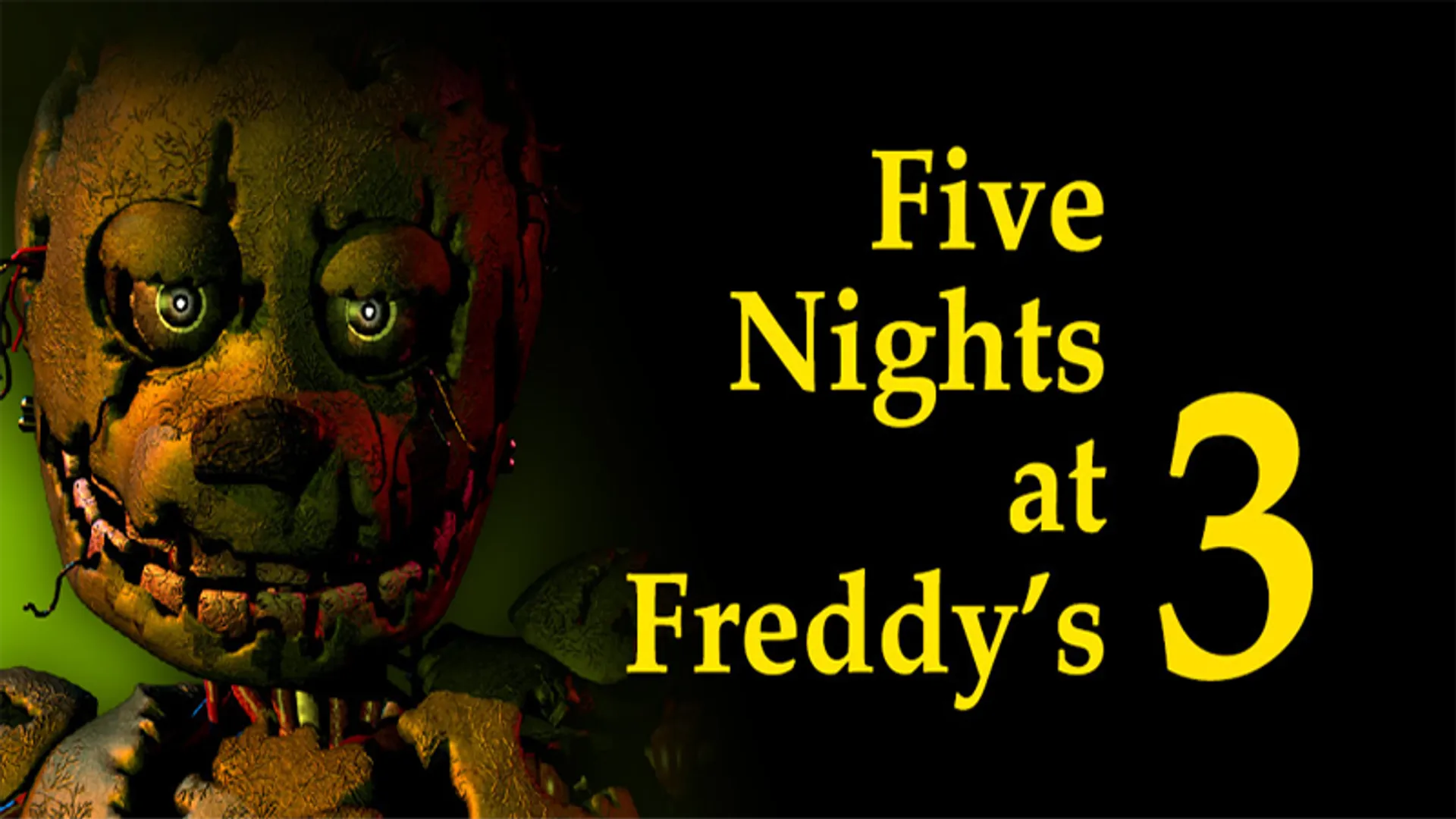
Set thirty years after the horrific events of the original pizzeria, this game introduces a completely new terrifying setting: a horror attraction designed to capitalize on the macabre legends of the past. In this game, you play as a night guard assigned to watch over this decrepit facility before it officially opens to the public. Unlike previous entries, this game simplifies the threat down to a single, highly intelligent animatronic entity known as Springtrap. Because there is only one real physical threat in this game, the tension is significantly heightened as you are forced into a relentless game of cat and mouse. You must use the building's faulty security systems to lure him away from your office.
Your primary defense mechanism is the audio lure. Playing a child's voice in an adjacent room is the only way to dictate Springtrap's movements within this game. However, the antiquated technology in the building frequently breaks down. Mastering the timing of audio cues in Five Nights at Freddy's 3 is essential. If the audio device fails while Springtrap is near, you will be left completely defenseless until it restarts.
Tracking your nemesis requires constant monitoring of the static-filled security cameras. In Five Nights at Freddy's 3, these camera systems are notoriously unreliable and will periodically crash. You must turn away from the cameras to manually reboot them via the maintenance panel in Five Nights at Freddy's 3. This crucial action forces you to take your eyes off the monster, creating a brilliant layer of psychological anxiety.
The layout of the attraction also introduces a secondary threat: the ventilation system. Springtrap can bypass the main hallways by crawling through the vents. Sealing a vent in Five Nights at Freddy's 3 can save your life, but you can only seal one at a time. The constant juggling of audio, cameras, and ventilation in Five Nights at Freddy's 3 creates a frantic, panic-inducing gameplay loop that tests your ability to multitask under extreme stress.
While Springtrap is the only physical danger, he is far from the only horror in the building. As the night progresses, the poor ventilation causes your character to experience intense hallucinations. These phantom animatronics in Five Nights at Freddy's 3 cannot kill you directly, but their jumpscares will disable your vital systems. If a phantom disables your audio just as Springtrap approaches, your run in Five Nights at Freddy's 3 is practically over. Managing these hallucinations is arguably more difficult than managing Springtrap himself.
The phantoms appear on the cameras or in your office seemingly at random. If you spot a phantom on a camera in Five Nights at Freddy's 3, you must immediately switch feeds or drop the monitor to avoid their attack. Memorizing the spawn triggers for these phantoms in Five Nights at Freddy's 3 is crucial for maintaining your system integrity during the later, more difficult nights.
The difficulty scales dramatically as the week concludes. By Night 5 in Five Nights at Freddy's 3, Springtrap is hyper-aggressive, and the systems break down almost constantly. Surviving this onslaught requires a perfect rhythm of checking cameras, playing audio, and resetting systems blindly. Beating the final night in Five Nights at Freddy's 3 is a true badge of honor among horror gaming fans.
The visual design of the antagonist is a masterpiece of horrific character creation. The rotting suit of Springtrap combined with the gruesome reality of what lies inside him gives Five Nights at Freddy's 3 a distinctly morbid atmosphere. Furthermore, the ambient sounds of the failing attraction in Five Nights at Freddy's 3—the groaning pipes and flickering lights—ensure that players never feel comfortable in their office.
This third installment holds a special place in the hearts of franchise lore enthusiasts. It features hidden minigames that provide crucial context regarding the tragic backstory of the series. Discovering how to access and complete these secret sequences in Five Nights at Freddy's 3 unlocks the highly coveted "Good Ending." The narrative depth hidden beneath the jumpscares in Five Nights at Freddy's 3 elevated the franchise from a simple indie horror game into a massive multimedia phenomenon.
The pixelated minigames reveal the ultimate fate of the series' main antagonist. The storytelling in Five Nights at Freddy's 3 is intentionally cryptic, forcing the community to piece together the timeline through environmental clues. The lore drops provided in Five Nights at Freddy's 3 fundamentally changed how fans viewed the earlier games, making it an essential chapter in the saga.
Unlike other horror titles that rely on gore or monsters chasing you through open environments, this game isolates you. The feeling of being trapped in a small room while a singular, intelligent threat stalks you makes Five Nights at Freddy's 3 incredibly stressful. The fact that the building's own systems are working against you in Five Nights at Freddy's 3 amplifies the feeling of absolute helplessness.
In conclusion, this installment proves that sometimes less is more in horror game design. By focusing the entire threat onto one deeply unsettling character, Five Nights at Freddy's 3 creates a much more intimate and focused horror experience. You are not just surviving against mindless robots; you are surviving against a calculating killer. The strategic depth required to keep him at bay ensures that Five Nights at Freddy's 3 remains engaging long after the initial scares fade.
Whether you are here for the deep lore or simply looking for a solid scare, this game delivers on all fronts. The grimy aesthetic and intense resource management mechanics make Five Nights at Freddy's 3 a standout title in the survival horror genre. Prepare to face the demons of Fazbear's past. Check your cameras, lock the vents, and see if you have the nerve to survive Five Nights at Freddy's 3!