STATUS: ACTIVE // VETERAN GAMER REVIEW
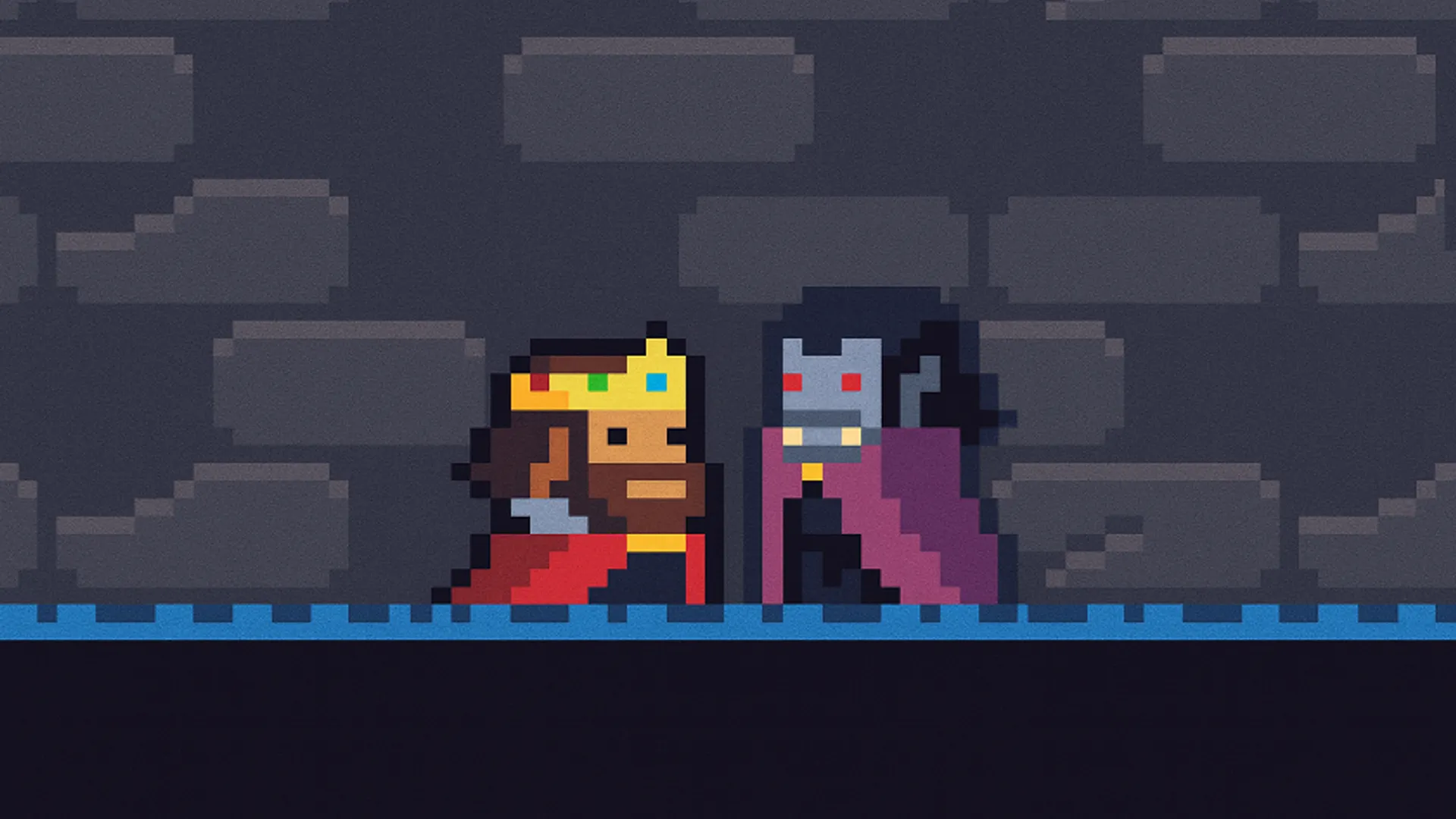
When you first boot up Lumen King, the premise seems straightforward enough: you play as a cursed vampire navigating a series of dark dungeons to rescue your queen. The pixel art is charming, and the basic WASD movement scheme feels instantly familiar. However, this accessibility is a meticulously crafted trap. Lumen King is not a generic dungeon crawler; it is a brutally precise puzzle-platformer that weaponizes light itself. In Lumen King, light is not a tool to illuminate your path—it is a lethal, instantaneous hazard. The moment a single pixel of your character model intersects with a light beam, you are instantly incinerated. If you approach Lumen King expecting a forgiving, casual puzzle experience, you will be violently rejected by its uncompromising mechanics.
I have spent hours dissecting the environmental cycles and hitboxes of Lumen King. The skill ceiling in this game is dictated entirely by your ability to process oscillating light patterns and execute frame-perfect movement. Unlike games where enemies have predictable AI that can be baited or manipulated, the hazards in Lumen King are governed by cold, rigid, global timers. The sweeping beams and strobing spotlights do not care where you are; they follow their algorithmic path with absolute certainty. To survive the labyrinthine levels of Lumen King, you must abandon reactive gameplay. You must memorize the oscillation frequencies, calculate your movement latency, and essentially become a creature of pure, calculated darkness.
The primary gameplay loop of Lumen King is an exercise in claustrophobic tension. You are constantly moving between slivers of safe shadow, waiting for the precise millisecond when the light cycle shifts to grant you a brief window of passage. The mechanics of Lumen King are minimalist by design, forcing the complexity entirely onto the environmental level design and your spatial awareness.
The most punishing aspect of Lumen King is its strict collision detection regarding light sources. The game engine does not use a generous bounding box for the light beams; it uses pixel-perfect edge detection. This means that even if only the very tip of your vampire's cape grazes the edge of a spotlight in Lumen King, the lethal damage is instantly applied. Casual players frequently die while trying to squeeze past a rotating beam because they misjudge the exact pixel boundary where the light ends and the shadow begins.
To navigate safely, elite players of Lumen King rely on "shadow tracing." Instead of moving to the center of a safe zone, they intentionally hug the absolute edge of the darkness, maximizing their distance from the incoming light source. This technique requires an intimate understanding of your character's exact pixel dimensions within Lumen King. You must learn to visually parse the sharp contrast between the safe `#000000` shadow tiles and the lethal illuminated zones, treating the light not as a visual effect, but as solid, impassable geometry.
Complicating the tight hitboxes in Lumen King is the game's movement physics. Your vampire does not instantly halt the moment you release the WASD keys. There is a built-in deceleration curve—a slight, deliberate "slide" or stopping distance. If you are sprinting toward a sliver of shadow in Lumen King and wait until you are fully inside it to release your movement key, your momentum will carry you right out the other side and directly into the next lethal light beam.
Mastering the movement in Lumen King requires proactive input release. You must learn to release the movement key several frames before you reach your intended safe spot, allowing the deceleration curve to organically park your character perfectly within the shadow. This is incredibly difficult to execute consistently when the light cycles in Lumen King are forcing you to move at maximum speed. It creates a terrifying friction between the urgency of the environmental hazards and the necessity for delicate, controlled inputs.
Every single hazard in Lumen King—from the rotating lighthouse beams to the strobing floor tiles—operates on a rigid global timer. These cycles begin the exact moment the level loads. The difficulty in the later stages of Lumen King arises when multiple overlapping light cycles are placed in close proximity. A rotating beam might intersect with a strobing tile, creating a complex Venn diagram of lethal light that only offers a safe path for a fraction of a second every third cycle.
You cannot brute-force your way through these complex intersections in Lumen King. You must stand in the shadows and observe, breaking down the compound oscillation frequencies in your head. Once you identify the synchronization gap—the brief window where all intersecting light sources shift away simultaneously—you must commit to your movement with absolute certainty. Hesitation in Lumen King is just as fatal as reckless aggression.
For those looking to optimize their completion times and dominate the speedrun categories in Lumen King, mere survival is unacceptable. The true mastery involves aggressively manipulating the global timers:
The atmosphere of Lumen King is a masterclass in minimalist tension. The color palette is heavily restricted to stark blacks, deep grays, and blinding, searing whites and yellows. The audio design in Lumen King is equally oppressive; there is very little background music, just the low hum of the environmental machinery and the sharp, startling sizzle sound effect that plays whenever you touch the light. It creates a deeply claustrophobic experience, forcing you to hold your breath as you squeeze through impossibly tight gaps.
Because the tension in Lumen King is so constant, the release of finally solving a room is incredibly potent. When you successfully shadow-step through a massive gauntlet of strobing tiles and rotating beams, arriving perfectly safe in the darkness on the other side, the dopamine rush is immense. Lumen King does not hand you victories; it forces you to earn them through raw spatial awareness and flawless input execution. It is the deep satisfaction of conquering an environment that is algorithmically designed to destroy you.
Lumen King is a brilliant, uncompromising puzzle-platformer that takes a simple concept—avoid the light—and pushes it to its absolute mechanical limits. It is not a game you play passively while watching a video on your second monitor; Lumen King demands your total, undivided attention, punishing the slightest miscalculation with instant death. The rigid cycles and strict hitboxes will undoubtedly frustrate casual players.
However, if you are a hardcore gamer who thrives on executing frame-perfect movement and dissecting complex environmental logic, Lumen King is an absolute masterpiece. Stop complaining about the hitboxes; the light is completely deterministic. Lock in your timing, master the deceleration curve, and show the dark labyrinths of Lumen King exactly what peak execution looks like. The queen is waiting, and only the most technically proficient vampires will survive the dawn.