STATUS: ACTIVE // VETERAN GAMER REVIEW
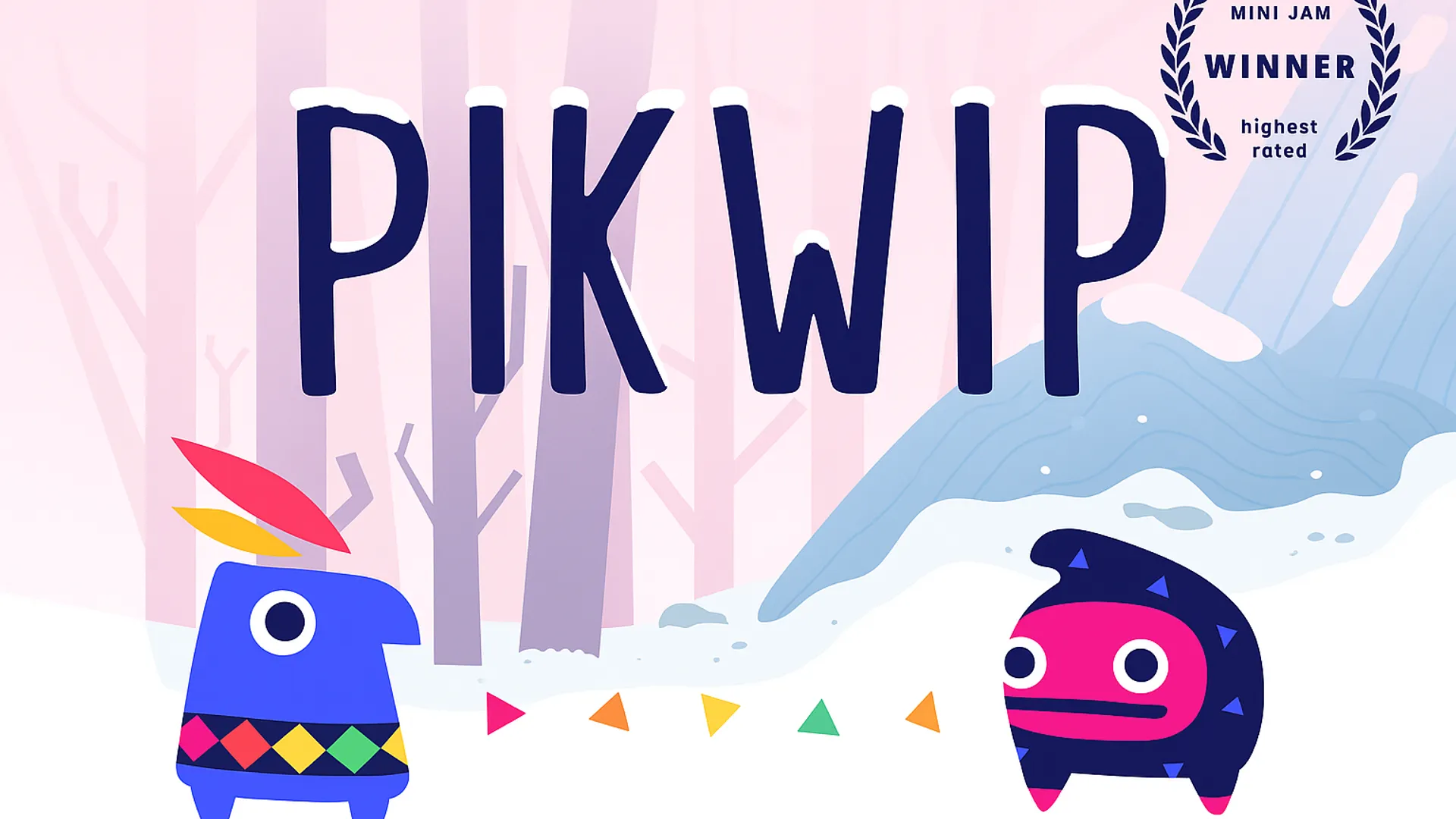
When you first jump into Pikwip, it presents itself as a charming, almost relaxing puzzle platformer. You control two small, brightly colored characters exploring a serene sky filled with floating white platforms. The central mechanic is immediately obvious: the two characters are physically connected by a short, unbreakable rope. The early levels of Pikwip ease you into this, letting you use the rope to gently pull your partner up over small ledges or swing across minor gaps.
However, the cooperative charm quickly mutates into a grueling mechanical stress test. Pikwip is not a casual sandbox; it is a brutally strict physics engine designed to punish poor communication and sloppy execution. If you attempt to play Pikwip by just running forward and hoping the rope physics sort themselves out, you will inevitably drag your partner directly into the abyss, forcing a complete restart of the level.
I’ve spent an absurd amount of time trying to perfect-clear the later stages of Pikwip, and the level design is brilliantly sadistic. The game stops offering you solid ground and starts filling the sky with disappearing platforms, shifting gravity zones, and rotating gears. In Pikwip, the rope itself is your primary enemy. Every single jump must be calculated not just for your own landing, but for the exact tension and pendulum arc it will inflict on your partner.
Surviving the final tiers of Pikwip requires a fundamental shift in your platforming mindset. You have to transition from playing instinctively to playing in perfect, metronomic synchronization. You aren't just moving to the next platform; you are plotting a simultaneous dual-input route that accounts for the maximum stretch distance of the tether. Elite veterans playing Pikwip often spend minutes analyzing a single screen, mentally rehearsing the precise push-and-pull rhythm before executing a single jump.
The most punishing mechanical element of Pikwip is how it handles momentum transfer. The characters do not just stop when the rope pulls taut; the kinetic energy is violently transferred from one to the other. The entire challenge revolves around knowing exactly when to anchor yourself and when to let the momentum carry you forward.
The most vital technique for conquering Pikwip is mastering the "tether anchor." The game allows one character to grip a surface while the other swings freely. However, many walls are frictionless, meaning the anchor player must constantly fight gravity while bearing the full weight of their swinging partner.
Casual players constantly die in Pikwip because they panic during a swing. The swinging player tries to jump too early, disrupting the arc and dragging the anchor down. Veterans of Pikwip rely on intense observation and trust. They utilize the tether anchor to hold their position and study the platform cycles, waiting for the exact millisecond when the pendulum reaches its maximum apex before releasing. This intense, calculated patience is what separates the frustrated quitters from the true masters of Pikwip.
Another massive hurdle in Pikwip is managing the rope slack. The game frequently forces you to navigate tight, enclosed spaces where an extended rope will snag on the geometry, instantly halting your momentum and dropping you into the void. You do not have the luxury of sloppy spacing.
This spatial pressure creates a brilliant mechanical tension. In Pikwip, jumping simultaneously is often a death sentence if the platforms are uneven. Elite players utilize a technique called "asynchronous jumping"—one player initiates a small hop to create slack, allowing the second player to execute a massive leap over a hazard without hitting the tension limit. By fully embracing this precise slack control in Pikwip, veterans can safely navigate the most claustrophobic sections of the game, snatching victory from impossible odds.
For the hardcore speedrunning community obsessed with logging the fastest possible clear times in Pikwip, playing cautiously is completely off the table. The highest tier of play revolves around manipulating the rope tension calculations and exploiting the way the engine processes simultaneous inputs.
These extreme tactics in Pikwip demand terrifying execution. Nailing a perfect tension slingshot requires literally frame-perfect synchronized inputs at 60 frames per second. If you miss the window by a single frame in Pikwip, the momentum breaks and both players plummet to their deaths instantly.
The aesthetic presentation of Pikwip is deliberately designed to contrast with its stressful gameplay. The bright sky and soft ambient music initially mask the intense precision required. However, the audio design in Pikwip provides incredibly tense, subtle sound cues—like the specific creaking noise the rope makes right before it snaps taut—that you must learn to recognize instantly. The game actively demands your complete sensory focus and absolute trust in your partner.
This psychological pressure makes the core loop of Pikwip surprisingly addictive. When you finally pull off a flawless run through a level that has killed you fifty times—perfectly anchoring the pendulum, exploiting the slack management, and reaching the exit—the feeling of relief is indescribable. Pikwip rewards you with the profound dopamine hit of mastering an unforgiving physics system through sheer cooperative perfection.
Key Insight: Pikwip is a masterful, deceptively vicious distillation of the hardcore co-op platformer genre. It takes a highly minimalist, friendly aesthetic and wraps it around a heavily punishing, physics-strict tether engine. Conquering the final stages in Pikwip requires sweat-inducing focus, punishing impatient movements and rewarding perfect dual-synchronization with brutal efficiency.
If you are the type of hardcore gamer who thrives on dissecting physics interactions, optimizing rope momentum, and executing flawless jumps under extreme pressure, Pikwip is an absolute must-play. Stop treating it like a casual browser game and start respecting the tether. Lock in your pendulum arcs, master the asynchronous jumping, and show the leaderboards of Pikwip exactly what a flawless execution looks like. The sky is waiting, and only the most technically proficient partners will reach the end without breaking their connection.
No. In Pikwip, every single stage must be completed in one continuous, flawless run. If one player falls off the map right before the exit, both players are dragged back to the start.
Absolutely not. The tether in Pikwip is permanent and unbreakable. You must live and die together. You cannot sacrifice your partner to save yourself.