STATUS: ACTIVE // VETERAN GAMER REVIEW
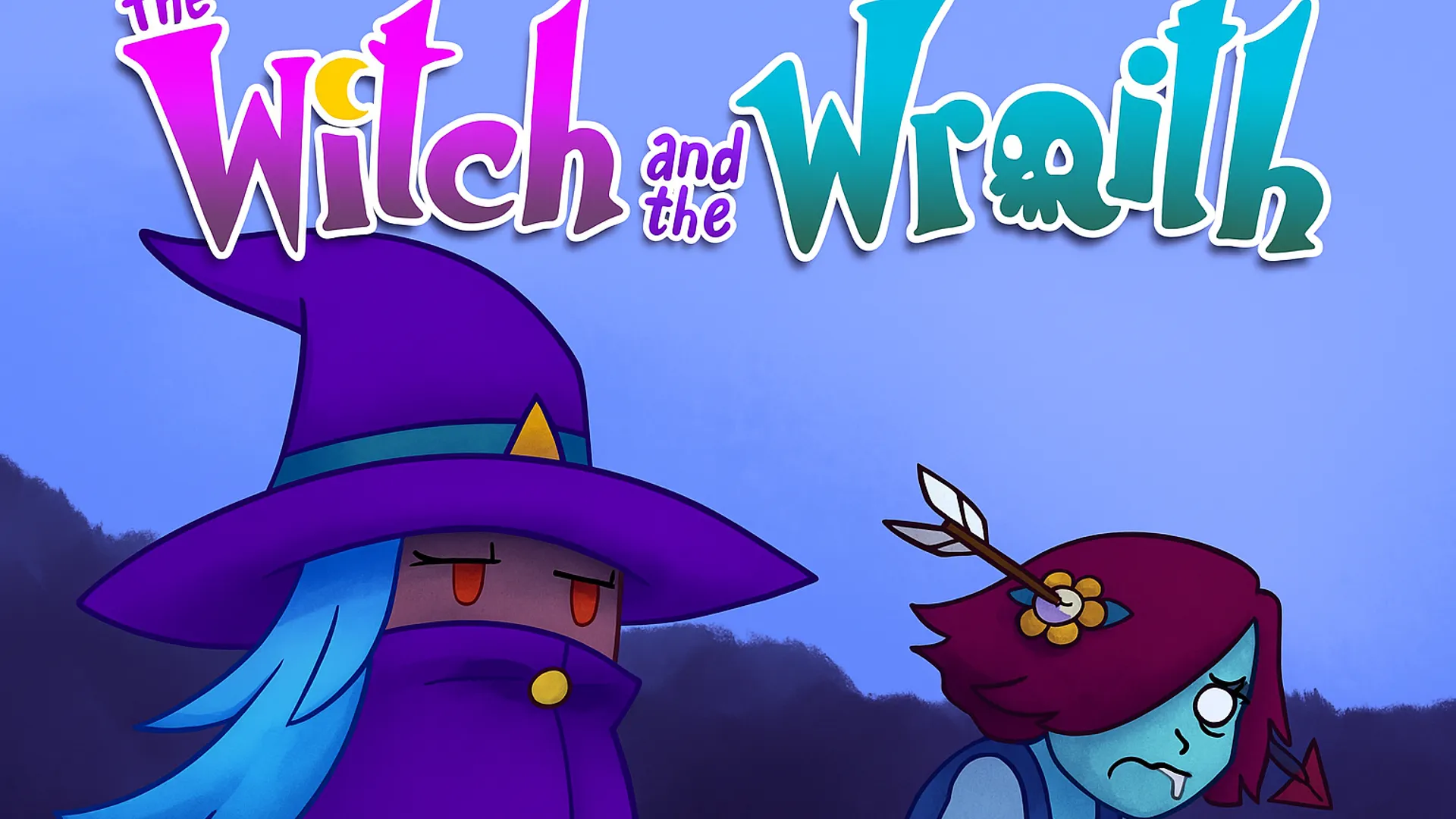
Anyone picking up The Witch and the Wraith usually expects a slow, melancholy story about grief and friendship. The art style is gorgeous, heavily stylized with thick shadows and bright magical particles, and the narrative centers around a lonely spellcaster reviving a lost soul. It feels like it should be an interactive book.
But underneath the beautiful dialogue and the sweeping orchestral score, there is a viciously strict dual-control puzzle engine operating at all times. If you start The Witch and the Wraith thinking you can just lazily move one character to a door, park them, and then move the other, the game will physically stop you. The two protagonists are bound by a magical tether that snaps if they drift too far apart, instantly resetting the room. It demands that you pilot two separate bodies simultaneously, a cognitive load that quickly overwhelms casual players before they even clear the tutorial forest.
I’ve banged my head against the late-game temples in The Witch and the Wraith for hours, and the puzzle logic becomes shockingly brutal. You aren't just opening doors; you are managing two entirely different states of matter. The Witch interacts with the physical world, while the Wraith can phase through specific spectral barriers.
The levels expand into massive, multi-tiered gauntlets requiring you to chain physical lever pulls with spectral dashing, all while keeping the tether intact. Beating the final chapters of The Witch and the Wraith requires you to split your brain in half. You have to constantly monitor the spatial relationship between two moving hitboxes, executing asynchronous inputs with a level of precision that feels more like playing a piano than holding a controller.
In The Witch and the Wraith, mastering the tether distance is your absolute priority. The ancient ruins do not care about your emotional connection to the characters; they care about collision logic. Every single step in The Witch and the Wraith must be evaluated for both characters. Furthermore, in The Witch and the Wraith, overlapping inputs are your worst enemy. You must train your hands in The Witch and the Wraith to execute distinct movements without crossing wires in your head.
The core friction of The Witch and the Wraith is the constant tension of the tether. The game loves to present you with two switches on opposite sides of a chasm that are exactly one pixel further apart than your maximum leash length. The entire challenge revolves around finding the microscopic sweet spots where both characters can act without breaking the bond.
The most important physical law in The Witch and the Wraith is understanding the elasticity of the bond. Unlike rigid co-op games, the leash here has a tiny bit of give before it shatters. If you move the Witch to the absolute edge of a platform, you can visually see the magic line turn from blue to aggressive red in The Witch and the Wraith, warning you of impending failure.
Rookies constantly snap the leash because they don't trust the red zone. Elite speedrunners playing The Witch and the Wraith, however, utilize a strategy known as "edge tensioning." By planting the Witch on the exact frame the tether turns red, veterans can stretch the Wraith's hitbox just far enough to interact with a switch that should technically be out of bounds. This highly technical micro-adjustment allows runners of The Witch and the Wraith to intentionally break the intended sequence of the puzzle, skipping lengthy backtrack sections by brute-forcing a mechanism. This intense spatial management separates the casual story readers from the puzzle masters.
Another massive hurdle in The Witch and the Wraith is managing the Wraith's ability to pass through ghost-walls. The Witch and the Wraith engine only allows the Wraith to be intangible for a short burst.
This phasing mechanic is not just an exploration tool; it's a strict timing gate. If you trigger the phase but the Witch gets stuck on a physical rock, the Wraith will solidify inside the ghost-wall, instantly killing them. Elite players utilize "anchor buffering"—moving the Witch perfectly parallel to the Wraith's trajectory so the tether pulls the ghost through the wall slightly faster than their base movement speed. By manipulating the leash physics in The Witch and the Wraith, veterans can slingshot the Wraith through barriers before the intangibility timer runs out, keeping the run alive and allowing them to bypass entirely locked sections of the map.
For those obsessed with logging the fastest possible completion times in The Witch and the Wraith, solving the puzzles as intended is entirely too slow. The speedrunning community has torn this game apart, utilizing bizarre engine quirks to shatter the tether logic. The top tier of play revolves around manipulating the frame data of the interaction animations.
These sequence-breaking maneuvers in The Witch and the Wraith demand terrifying execution. Nailing a perfect ghost zip leaves absolutely zero margin for error. If you miss that pixel alignment by a fraction of a millimeter in The Witch and the Wraith, the engine registers a hard crush, instantly wiping your progress and sending you back to the start of the temple.
The visual presentation of The Witch and the Wraith is deliberately designed to induce melancholy. The heavy shadows, the flickering magical light, and the encroaching fog create a constant feeling of isolation. The audio design in The Witch and the Wraith provides a sweeping, tragic orchestral track overlaid with the horrifying sound of the tether straining to its breaking point. The game actively tries to make you feel stressed about the bond, attempting to force a panic movement.
This sensory pressure makes the core loop of The Witch and the Wraith surprisingly addictive. When you pull off a massive multi-room puzzle—perfectly edge-tensioning a switch, exploiting an anchor buffer to slide through a wall, and finally reuniting the duo—the feeling of relief is massive. The Witch and the Wraith doesn't reward you with explosive combat; it rewards you with the profound dopamine hit of surviving a brutal, high-stakes logic test through sheer mechanical mastery.
The Witch and the Wraith is a masterful, deceptively vicious distillation of the single-player co-op genre. It takes a highly accessible, beautiful aesthetic and wraps it around a heavily punishing, physics-strict engine. It is not a game you play just to see the emotional ending; conquering the final temples in The Witch and the Wraith requires sweat-inducing focus, punishing sloppy positioning and rewarding perfect route memorization with brutal efficiency.
If you are the type of hardcore gamer who thrives on dissecting puzzle frames, optimizing leash distances, and executing flawless dual-inputs under extreme pressure, The Witch and the Wraith is a must-play. Stop treating it like a simple visual novel and start respecting the physics engine. Lock in your timing, master the edge tension, and show the leaderboards of The Witch and the Wraith exactly what a flawless synchronization looks like. The spirit is waiting, and only the most technically proficient casters will survive the journey.
No. The game is strictly single-player. The entire difficulty curve of The Witch and the Wraith is based on forcing one human brain to process two separate control schemes simultaneously.
Neither character has traditional health. Any lethal mistake, including breaking the tether in The Witch and the Wraith, results in an instant room reset.