STATUS: ACTIVE // VETERAN GAMER REVIEW
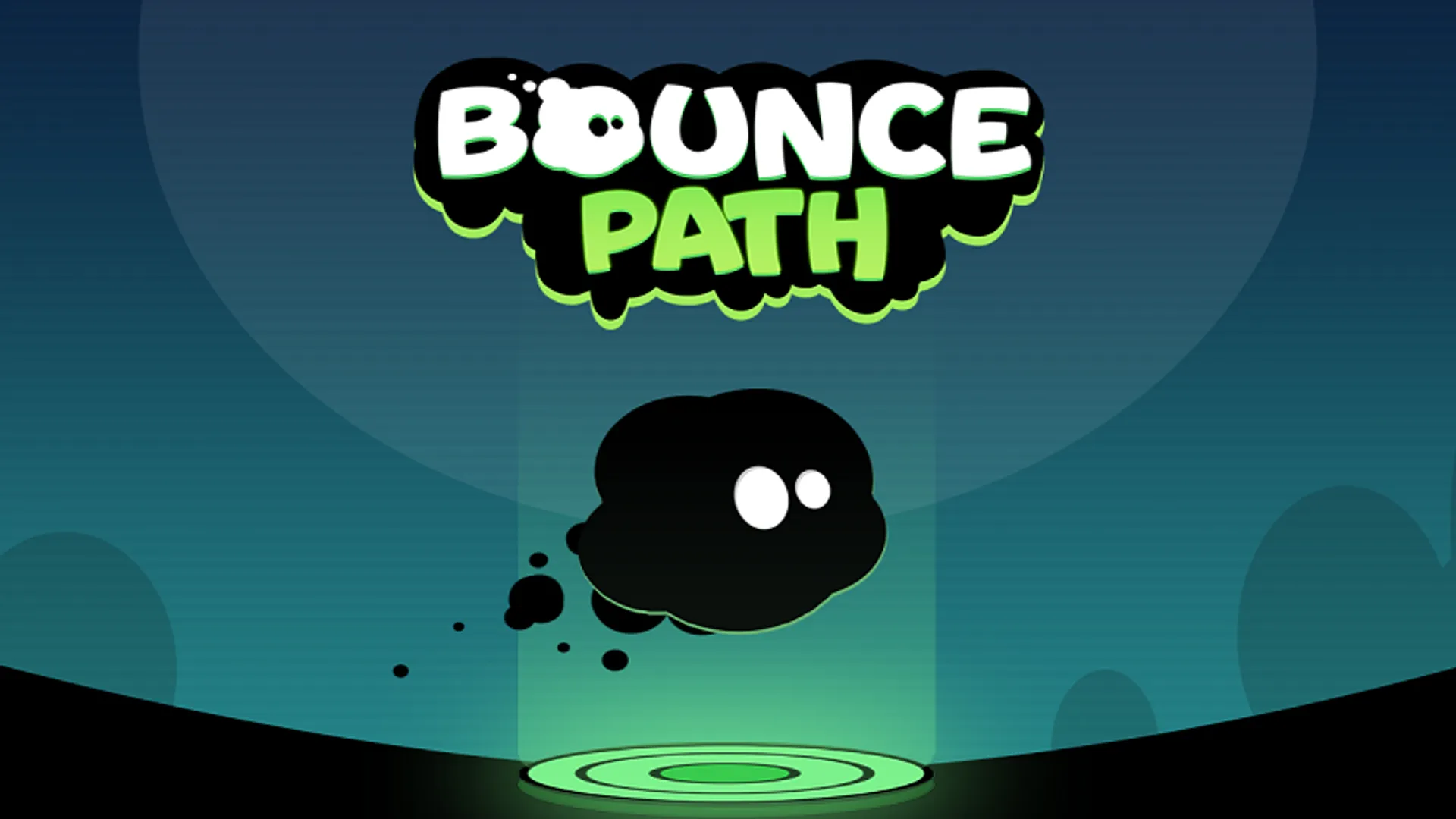
When a casual player boots up Bounce Path, they are typically drawn in by the minimalist neon aesthetic and the driving electronic soundtrack. The premise is incredibly simple: you control a glowing Blob, and you must click to jump along a rising, winding track. The game explicitly tells you to move in sync with the beat. However, the moment you attempt the later stages, Bounce Path brutally shatters this illusion of a casual, relaxing musical journey. This is not a forgiving rhythm game where you can coast by on feeling the groove. Bounce Path is a punishing, hyper-strict input processor that demands absolute synchronization between your auditory cortex and your motor functions. If you attempt to play Bounce Path by reacting purely to the visual rendering of the approaching gaps, you will consistently fail.
I have spent dozens of hours tearing down the internal engine of Bounce Path, analyzing frame data and input latency. The most critical realization any player must make is that the visuals in this game are entirely secondary. The visual rendering is often deliberately misleading, designed to trick your eyes into jumping early or late based on parallax scrolling effects. The true engine of Bounce Path operates entirely on the audio track. Every single safe landing zone and every lethal gap is hard-coded to a specific BPM (Beats Per Minute) marker. To truly master Bounce Path, you must learn to play almost blind, trusting the music implicitly and relying on rote muscle memory to execute frame-perfect jumps.
The primary gameplay loop of Bounce Path is an escalating test of sustained concentration. The track constantly forces you forward, and the only input you have is a single binary jump command. The complexity of Bounce Path arises from how the game layers the audio and visual information to create conflicting signals in your brain.
The most notorious mechanic in Bounce Path is its deliberate use of visual desync. In the early levels, the visual layout of the platforms perfectly matches the heavy bass kicks of the soundtrack. However, as you progress, Bounce Path introduces complex polyrhythms and off-beat jumps. The game will visually present a massive, terrifying gap that seems to require an immediate jump, but the underlying audio track clearly indicates a half-beat delay. If you panic and jump when your eyes tell you to, the engine of Bounce Path will mercilessly drop your Blob into the abyss.
To survive the endgame tracks of Bounce Path, you must actively train yourself to ignore the visual rendering. Elite players often rely on "tunnel visioning" or even closing their eyes during particularly chaotic visual segments. They focus their entire cognitive load on processing the hi-hats and snare drums, waiting for the exact audio cue that dictates the jump. This audio-first approach is the only consistent way to navigate the maliciously deceptive visual design of Bounce Path.
The input processing in Bounce Path is incredibly strict. Many rhythm games offer a generous "leniency window," allowing you to hit a note slightly early or late and still receive a "Good" rating. Bounce Path offers no such luxury. If your input does not fall exactly on the designated BPM frame, your jump trajectory will be permanently altered, inevitably leading to a collision a few platforms down the line.
Because human reaction time combined with hardware latency is highly variable, top-tier players of Bounce Path do not react to the beat; they anticipate it. They utilize a mental technique called "pre-buffering." By internally counting the subdivision of the beat, they initiate the physical motion of clicking milliseconds *before* the actual audio cue plays. This ensures that the mechanical actuation of the mouse registers in the game engine on the exact frame the beat drops in Bounce Path. This level of input precision requires hours of grinding to lock the specific BPM into your muscle memory.
Just as you finally lock into the rhythm of a level, Bounce Path employs its most devastating mechanic: mid-level tempo shifts. The game will suddenly accelerate or decelerate the BPM without warning. This violently disrupts your established muscle memory. The jump arcs of the Blob in Bounce Path do not change with the speed of the music; instead, the physical distance between the platforms alters dynamically to match the new tempo.
When Bounce Path triggers a tempo shift, you must instantly discard your previous input buffering cadence and recalibrate on the fly. Failure to adapt within the span of a single beat guarantees failure. Veterans of Bounce Path survive these transitions by focusing heavily on the transitional drum fills. The audio design always telegraphs a speed change with a specific percussive roll. By memorizing these audio cues, you can mentally prepare to shift your clicking speed before the new tempo actually hits the main track in Bounce Path.
For those seeking to dominate the global leaderboards in Bounce Path, merely completing the tracks is insufficient. The highest level of play requires advanced metronome techniques and zero-latency hardware setups:
The aesthetic presentation of Bounce Path is designed to induce a trance state. The dark, pulsing neon environments flash in perfect synchronization with your inputs, creating a mesmerizing feedback loop. The audio design in Bounce Path is exceptionally crisp; every successful jump produces a satisfying, resonant chord that layers perfectly over the main soundtrack, making you feel like you are actively composing the music as you play.
This immersive flow state makes the gameplay loop of Bounce Path incredibly addictive. When you finally achieve perfect synchronization, effortlessly navigating a massive barrage of off-beat platforms and tempo shifts, the feeling of absolute control is intoxicating. The game does not offer you physical rewards; the dopamine hit in Bounce Path is the profound satisfaction of achieving perfect harmony between your auditory perception and your mechanical execution. It is the thrill of becoming entirely absorbed by the rhythm.
Bounce Path is a masterful, uncompromising distillation of the rhythm genre. It takes a simple one-button input scheme and wraps it in a viciously demanding audio-visual gauntlet. It is not a game you play casually while distracted; Bounce Path requires your absolute, undivided auditory focus, punishing visual reliance and rewarding perfect metronomic precision with brutal efficiency.
If you are the type of hardcore gamer who thrives on dissecting complex time signatures, mastering frame-perfect inputs, and executing flawless rhythmic sequences under extreme pressure, Bounce Path is an absolute must-play. Stop relying on your eyes and start trusting your ears. Lock in your input buffering, calibrate your hardware, and show the leaderboards of Bounce Path exactly what peak rhythmic dominance looks like. The track is waiting, and only the most technically proficient players will survive the final drop.