












Ludo King: Master Dice Strategies and Conquer Every Board
The core mechanical loop of Ludo King is built entirely around managing four distinct tokens on a cross-shaped board, relying on a random number generator to dictate every single step of your movement. You begin with all pieces locked inside your home base, completely immobilized until you successfully roll a six. From there, the digital translation of the ancient Indian game Pachisi transforms into a ruthless race where positioning, probability, and calculated aggression take precedence over pure luck.
A Deceptive Trap of Simple Mechanics
The Illusion of Safety
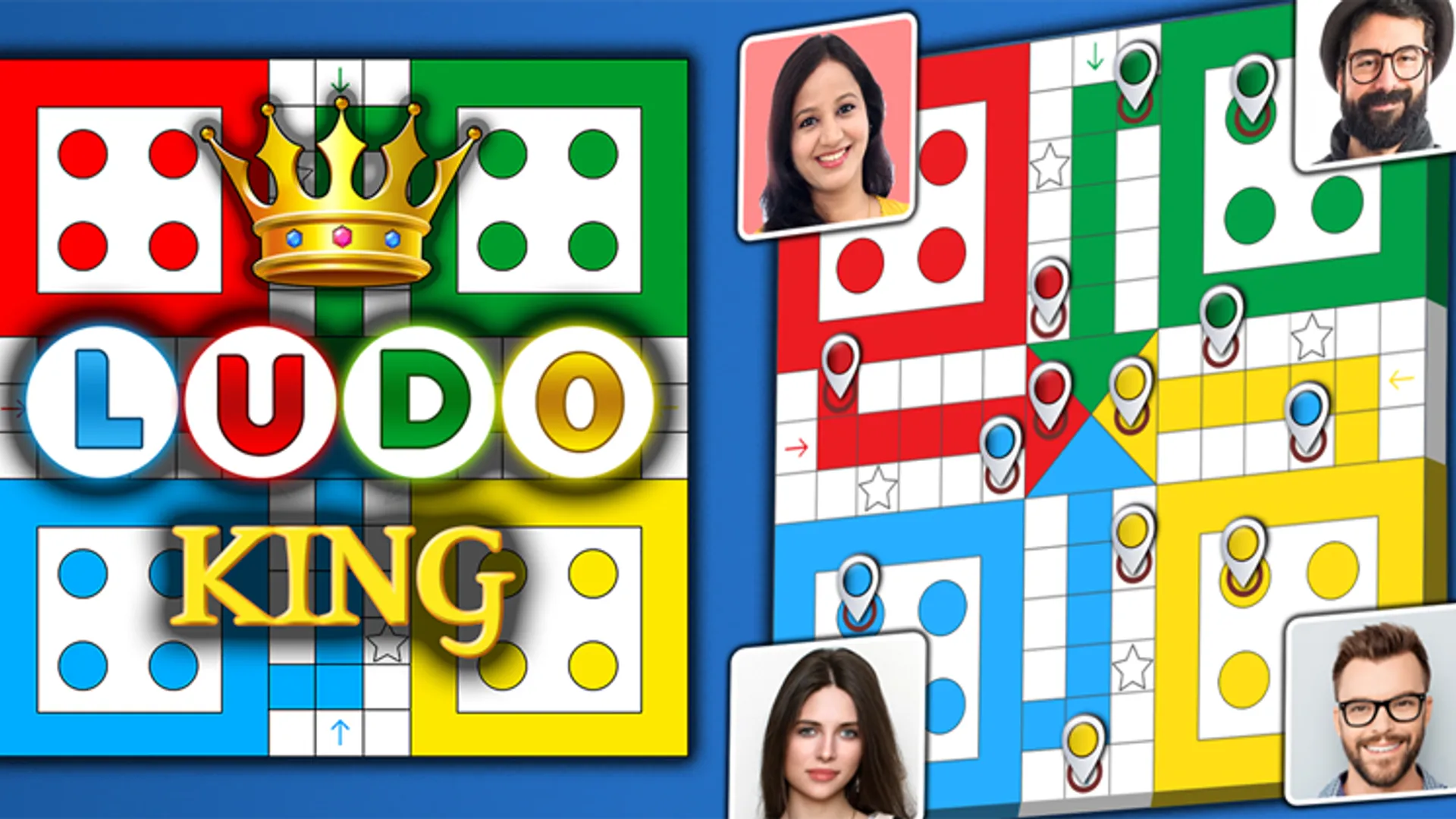
When you first boot up Ludo King, the vibrant interface and straightforward tap-to-roll mechanics create an immediate false sense of security. The digital board clearly marks safe zones—colored squares with a star icon—where your tokens cannot be captured by an opponent. However, relying solely on these safe zones in Ludo King is a tactical error. The moment you move outside these designated areas, your token is completely exposed. If an opponent rolls the exact number required to land on your square, your token is instantly sent back to the starting base, forcing you to roll another six just to re-enter the game.
This aggressive capture mechanic means that Ludo King is never a peaceful race to the finish line. It is a constant evaluation of risk. Should you move your lead token closer to the center, or should you advance a token from the back to act as a defensive barrier? Because Ludo King does not implement the traditional physical blocking rule (where two pieces of the same color create an impassable wall), your tokens are always vulnerable when traversing the open lanes.
Probability and the Six-Sided Die
Understanding the random number generator in Ludo King is crucial for setting expectations. Many veteran players have expressed frustration over the perceived scripting of dice rolls, particularly when an opponent miraculously rolls three consecutive sixes. However, from a mechanical standpoint, Ludo King operates on a standard 1/6 probability distribution for each face of the die. The psychological pressure of seeing an opponent land the exact roll they need often overshadows the mathematical reality of the game engine.
Because Ludo King requires a six to break a token out of the starting base, early game momentum is entirely dependent on this specific roll. If you experience a dry spell and fail to roll a six while your opponents are already halfway across the board, your strategic options become severely limited. In these scenarios, Ludo King forces you to play defensively, trailing behind opponent tokens in hopes of rolling the perfect number to execute a capture from the rear.
Hidden Traps of Online Multiplayer
The Global Lobby and Pass-and-Play
The primary draw of Ludo King lies in its versatile multiplayer architecture. You can connect with thousands of global players in real-time online matches, or you can host private rooms for friends and family using a shared room code. The online environment in Ludo King introduces strict turn timers. If a player fails to roll the die or select a token within the allotted time, the game engine automatically skips their turn. Missing three turns in a single match of Ludo King results in an automatic forfeiture.
For offline sessions, Ludo King offers a robust pass-and-play mode that supports up to six players on a single device. This mode completely removes the network latency variable, relying purely on the local processing of the random number generator. The local multiplayer mode in Ludo King captures the authentic feel of the physical board game, complete with the tactile feedback of tapping the screen to simulate a dice roll.
Expressive Emotes and Psychological Warfare
Communication in Ludo King is restricted to a curated set of animated emojis and predefined chat phrases. This constraint turns the emote system into a tool for psychological warfare. Sending a laughing emoji immediately after capturing an opponent's token is a common tactic in Ludo King to break their concentration. Because you cannot type custom messages in public lobbies, players must master the timing of these emotes to express frustration, confidence, or sarcastic sympathy.
The inability to chat freely ensures that Ludo King remains relatively free of toxic text chat, but the strategic deployment of the "crying face" or "angry face" emojis adds a layer of metagame interaction. When playing Ludo King in private lobbies, this dynamic shifts, as players usually communicate via external voice chat apps, heightening the tension and immediate feedback of every roll.
Managing Muscle Memory and Interface Navigation
The Tap-to-Roll Precision
While Ludo King is not a fast-paced action game, muscle memory still plays a role in navigating the interface efficiently. The dice sits neatly in the corner of your screen, and tapping it initiates the rolling animation. When you have multiple valid moves available, Ludo King highlights the eligible tokens, requiring you to manually select which piece to advance. In high-stakes online matches where the turn timer is rapidly depleting, a misclick can be devastating. Selecting a safe token instead of capturing an exposed opponent is a common mechanical error in Ludo King.
The user interface in Ludo King is deliberately oversized to accommodate various mobile devices and tablets, ensuring that touch targets are easily accessible. However, when multiple tokens occupy the same safe square, Ludo King stacks them vertically. You must carefully tap the exact token you wish to move, which can be mechanically tricky on smaller screens.
Unlockable Progression and Visual Themes
Progression in Ludo King is tracked through a coin economy. Winning matches, whether local or online, rewards you with in-game currency. These coins are primarily used to enter higher-stakes matches or to purchase cosmetic upgrades within the Ludo King store. You can unlock new dice designs, custom frames for your player avatar, and completely overhauled board themes that change the visual aesthetic from the classic minimalist design to elaborate fantasy or sci-fi environments.
These visual upgrades in Ludo King do not alter the underlying hitboxes or probabilities. A premium glowing die operates on the exact same random number generator as the default white die. The cosmetic progression system simply provides a long-term goal for dedicated players, ensuring that the visual experience of Ludo King remains fresh even after hundreds of matches.
"Never leave a token exactly six spaces ahead of an opponent. It is the most statistically likely roll when players are desperately tapping the die. Always position yourself either seven spaces ahead or trail closely behind to maintain the threat of capture." - Veteran Insight
Simulation Parameters
| Developer | Gametion |
|---|---|
| Core Genre | Digital Board Game |
| Multiplayer | 2-6 Players (Online & Local) |
| Input Method | Touch / Mouse Click |
| RNG Engine | Server-Side Probability |
- Six to Start: You must roll a rigid six on the digital die before any token can leave the home base and enter the active track.
- Aggressive Captures: Landing precisely on a square occupied by an opponent forces their token back to the starting area, resetting their progress.
- Safe Zones: Marked star squares protect your tokens from being captured, serving as crucial tactical checkpoints across the board.
- Turn Timers: Online multiplayer enforces strict countdowns; missing three consecutive actions results in an automatic system kick.
- Cosmetic Customization: Use earned coins to unlock vibrant dice skins, player frames, and thematic board layouts that alter the visual aesthetic.